

About
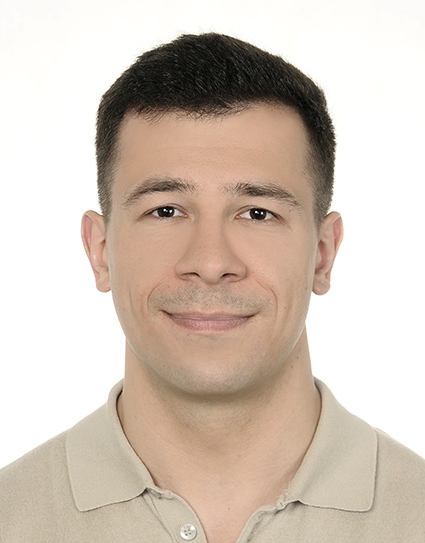
Oskar Polanski joined the School of Law in August 2026. He has degrees from Durham University (LLB, MJur) and the European University Institute (LLM). He is currently awaiting his viva, scheduled for later this year. During his PhD, he was a visiting researcher at the University of Edinburgh (2023). Oskar previously taught seminars in EU Constitutional Law at Durham University (2020-2021) and was module co-ordinator for Constitutional Law and Legal Research and Methodology at BRAC University (2023). He is also an editor at the European Journal of Legal Studies.
Oskar’s main research lies at the intersection of legal theory, public law, and EU law and reflects on what it means for law to exist, endure, and potentially cease to exist. His PhD thesis investigated this question in the context of the EU legal order and the EU polity. His current research seeks to develop a broader theoretical account of legal demise by examining whether law can fail in different ways, how legal systems lose their identity, and whether the conditions for the demise of law differ across municipal, supranational, and transnational legal systems.
Oskar’s research has been presented at various international conferences, including at the Law and Society Association Annual Meeting (2024), Global Summit on Constitutionalism (2025), IVR World Congress (2024, 2026) and World Congress of Constitutional Law (2026). He has initiated and is coordinating an international research network on the demise of law, bringing together scholars from different theoretical and disciplinary perspectives through workshops and conference panels, including at the IVR World Congress (2026).
Oskar's office hours are held on Thursdays from 15:00 to 16:00 and Fridays from 13:00 to 14:00. Please email in advance to arrange an appointment.