In the UK, around 7,700 women are diagnosed with ovarian cancer each year, making it the sixth most common cancer in women (Cancer Research UK).
If caught early, there is a 95% survival rate (stage 1, Cancer Research UK), however around 70% of patients are diagnosed at an advanced stage once the cancer has spread, making treatment more difficult.
The delay in diagnosis is often caused by the non-specific symptoms of ovarian cancer that can mimic other conditions, such as IBS, with typical symptoms including bloating, abdominal pain, loss of appetite and more frequent urination.
We are creating next-generation therapies for ovarian cancers

The challenges facing current treatments
Ovarian, like other cancers, is treated through chemotherapy, which, whilst killing cancer cells, also kills the body's healthy cells, leading to side effects including hair loss, nausea, fatigue and increased infection risk. Many patients eventually become resistant to standard chemotherapy, making treatment far more complex.
An innovative development
Founded on research developed at Swansea University, Viamab Therapeutics Ltd, a spin-out company led by Deya Gonzalez and Steve Conlan, has developed a new way of targeting cancer cells.
The technology they are developing is called an Antibody-Drug Conjugate (ADC), one of the fastest growing revolutions in oncology treatment. The antibody acts like a GPS tracker, locating specific cancer cells and tumours, as opposed to treating the whole body with chemotherapy.
The ADC travels through the body until it finds cancer cells carrying a specific marker. Once located, it delivers a powerful drug directly into the cancer cell and destroys it.
Making treatment more precise, cancer cells can be destroyed, whilst protecting the body’s healthy cells. Such a collaboration proves how academic research can be developed into technologies that have relatable, real-world impact.
What is unique about Viamab development?
Whilst targeted ADC therapies already exist, they primarily target Folate Receptor Alpha (FRα), a protein found on the surface of some cancer cells. However, these treatments are only suitable for patients whose tumours carry high levels of the marker, which not all ovarian cancers do.
Viamab Theraputics’s ADC, however, instead targets a marker known as Receptor for Advanced Glycation End Products (RAGE), which is present several cancers including in up to 93% of aggressive ovarian cancers.
This means Viamab Theraputics’s development could help treat considerably more patients than current targeted therapies, with the potential to save more lives worldwide.
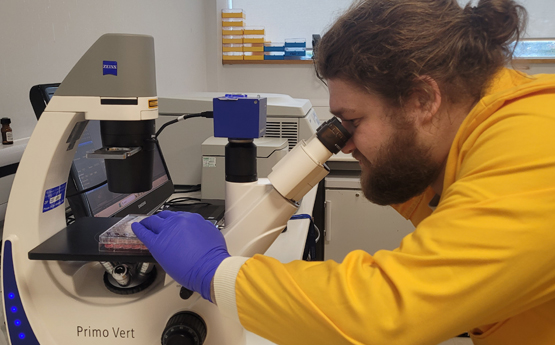
As this treatment is being developed with advanced and treatment-resistant cancers in mind, it has the potential to be life-changing. Given that ovarian cancer is often diagnosed at a later stage, the identification of the RAGE marker suggests that this treatment could remain effective even after the disease has progressed, helping to address one of the major challenges associated with ovarian cancer diagnosis and treatment.
Where are they with development?
The treatment has not yet been tested in patients, but pre-clinical results are promising. Research has shown that Viamab’s ADC is able to locate, enter and kill cancer cells and reduce tumours and demonstrate an encouraging initial safety profile.
Could it work for other cancers?
Early signs look promising. Research has revealed RAGE is present in several other aggressive cancers, including bowel, brain, prostate and triple-negative breast, meaning the same ADC technology could be adapted to treat more cancers.
What happens next?
Before the treatment can be given to patients, Viamab must complete further testing and safety studies to obtain regulatory approval and begin human trials.
Viamab has secured patent protection for the technology, helping to support the future commercial development and investment opportunities required to fund the expansion of research and development towards clinical trials.
Why is this revolutionary?
Viamab Theraputics’s work in this field has received national recognition and was showcased at the UK Global R&D and Science Investment Summit at the Royal Society in June 2026.
Their research may have developed a way to identify and treat a marker that appears in far more cancer patients than current treatments can.
The benefits of this would be huge, and would include:
- Making targeted treatment available to far more patients
- Reducing the debilitating side effects of traditional chemotherapy
- Helping patients whose cancers no longer respond to existing therapies, or who have received a later diagnosis
- The potential to be adapted for other aggressive cancers
What does this mean for the future of cancer treatment?
Viamab Therapeutics' innovation could revolutionise oncology treatment worldwide, saving thousands of lives each year. If made available to patients, it has the potential to transform treatment pathways while reducing debilitating side effects. Furthermore, if the technology can be adapted to target other aggressive cancers, its impact could be far-reaching, fundamentally changing cancer treatment and improving outcomes for patients across the globe.