Data Science, MSc

Discover Swansea at our next Open Day

Book your place today
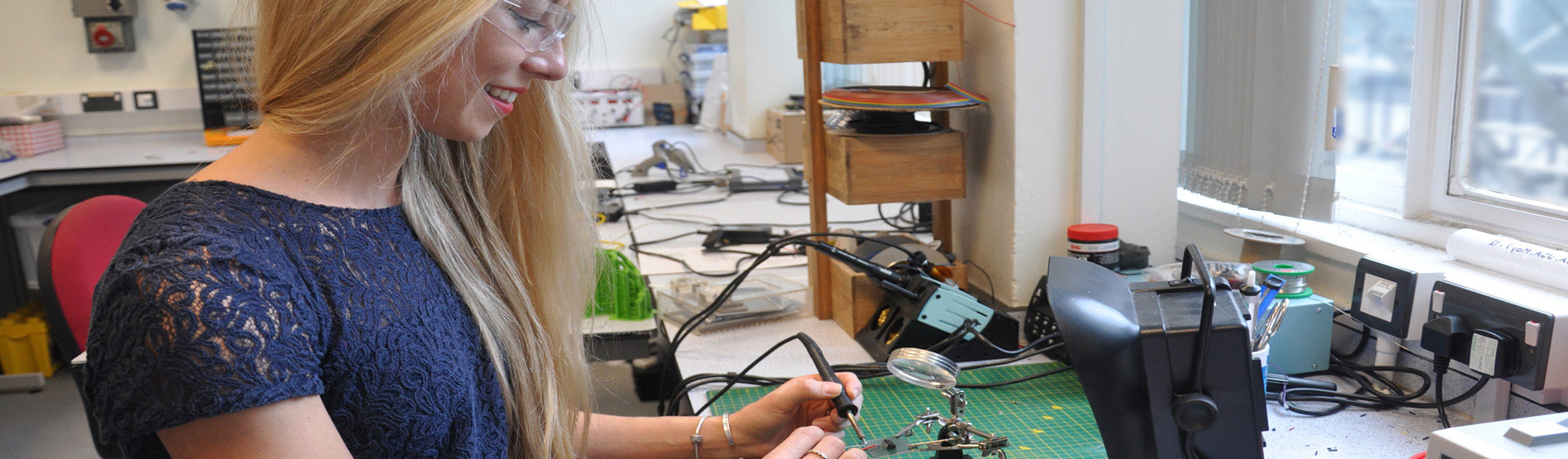
Student working in the maker Lab

Course Overview

Our MSc in Data Science will give you a solid grounding in data science concepts and technologies for extracting information and constructing knowledge from data.

The course focuses on the three core technical themes of data mining, machine learning, and visualisation.

You will study computational principles, methods, and systems for a variety of real-world applications that require mathematical foundations, programming skills, critical thinking, and ingenuity.

With large data sets now available across almost all industry sectors, there is an increasingly high demand for innovative new technologies and skilled data scientists.

Please note, Data Science, MSc, is not appropriate for those who do not have an undergraduate degree in Computer Science (or equivalent - please see entry requirements below). Please see Applied Data Science, MSc, where you will not require an undergraduate degree in Computer Science or Mathematics (or equivalent).

Why Data Science at Swansea?

You will be based at our £32.5m Computational Foundry, which lies at the heart of this course, and is the nucleus of a vibrant community for world-class research leaders in computer science.

Our sophisticated teaching and research equipment include a Vision and Biometric Lab, a Maker Lab, a Theory Lab, a Cyber Security/Networking Lab, a User Lab and a Visualisation Suite.

Computer Science at Swansea University is widely acknowledged as a leading UK department, with rankings reflecting teaching and research excellence. 

This programme is currently ranked:

  • Top 201-250 in the World (THE World University Rankings 2025)
  • 201-250 in the World for Computer Science and Information Systems (QS World University Rankings by Subject 2025), and we have
  • 100% World-leading and Internationally Excellent Ratings for Research Impact (REF 2021), and
  • 90% of our Research is World-leading and Internationally Excellent (REF 2021)

You will be taught by staff from internationally renowned AI research groups, including Professor Matt Jones, who has recently been awarded a prestigious personal five-year Fellowship by the Engineering and Physical Sciences Research Council (EPSRC) to pursue an adventurous and ambitious AI research agenda.

Our collective knowledge of constant developments in Artificial Intelligence helps to keep your learning fresh and relevant to the wider industry.

Your Data Science Experience

You will initially undertake a series of modules, a number of which will be compulsory and others you will choose. The next stage of the MSc is shaped by a major project module.

Developing research skills is an essential element of the course, enabling you to bring a critical perspective to current data science discipline, and apply it to future developments.

You learn how to mine structured data and unstructured data, gaining practical data mining experience alongside a systematic understanding of complex and heterogeneous data.

Conventional and state-of-the-art machine learning techniques will be taught through the application of methods and techniques to synthesise solutions.

By the end of the course you will be confident in applying concepts in data visualisation, information visualisation, and visual analytics to support data process and knowledge discovery.

Over the course of this degree you will be taught by staff from internationally renowned research groups. Their knowledge of constant developments in computer science helps to keep your learning fresh and relevant to the wider industry.

Our commitment to keeping up with the technological curve is also reflected in the hardware you will be working with every day.

Laboratories at Swansea are continually upgraded to ensure equipment is never more than three years old, and rarely more than two. Currently in use are three fully networked laboratories. One runs Windows, another runs Linux, and a third project laboratory contains specialised equipment.

Data Science Employment Opportunities

A range of employability skills and personal attributes have been embedded within each of the modules and the programme. These involve programming skills, handling of large data sets, problem solving, deployment of new algorithms, and the ability to identify sources of data as the challenges that practitioners from other disciplines face.

Data Science has a strong focus on the specific demands of a career in the modern industry. In practice, we expect many graduates to enter careers not only in the computer science industry, but also in applied scientific subjects such as medicine, which naturally deal with large amounts of data.

Completing this MSc considerably enhances your data science career prospects. Our graduates often progress to rewarding employment within esteemed organisations. Below are a number of their recent destinations.

  • Workflow developer, Irwin Mitchell
  • Programmer, Evil Twin Artworks
  • Web developer & web support, VSI Thinking
  • Software developer, Wireless Innovations
  • Associate business application analyst, CDC Software
  • Software developer, OpenBet Technologies
  • Software developer, BMJ Group

Modules

We're currently reviewing our curriculum to enhance your learning experience and embed skills that will benefit your future career. This means that some modules may be subject to change.

Entry Requirements

We consider all applicants on their own merits and welcome applications from students with a wide range of qualifications.