Around a quarter of all energy consumed in the UK goes toward providing heat for spaces and water, making every day heating the biggest challenge the UK faces in being able to provide affordable, low carbon energy.
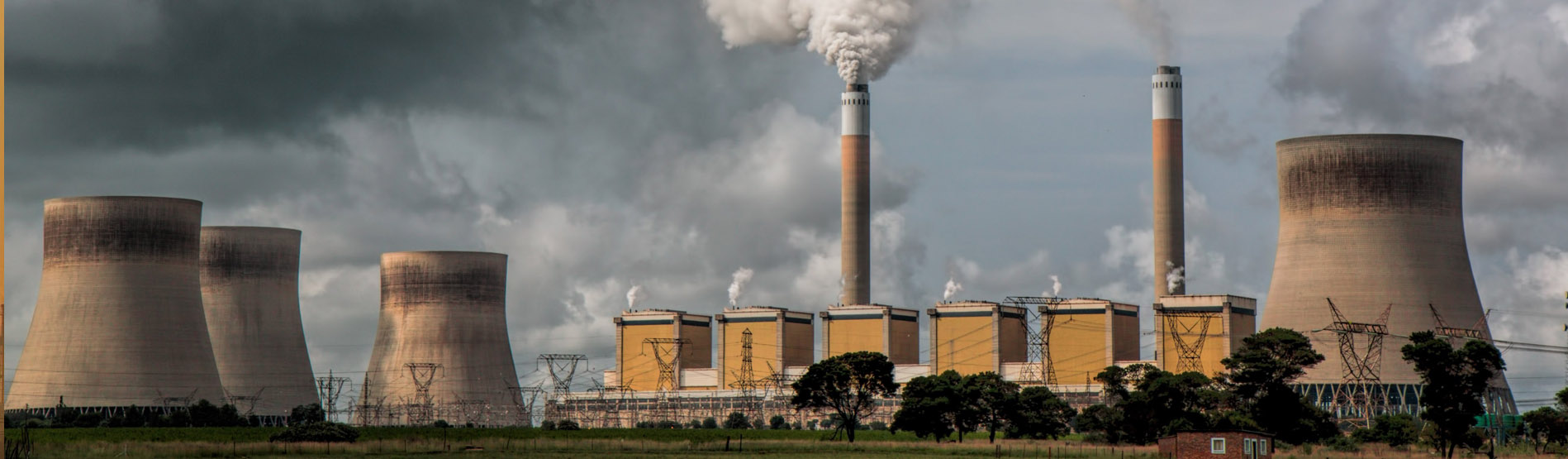
Heating domestic, commercial and industrial spaces is a huge contributor to UK fossil fuel use, significantly contributing to climate change, and the country’s ongoing energy security concerns, particularly given the dramatically rising costs that are associated with international conflict.
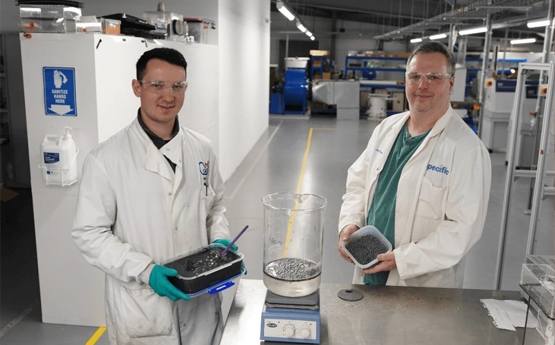
In response to this challenge, Dr Eifion Jewell and Dr Jon Elvins, working hand-in-hand with SPECIFIC IKC and SWITCH, have developed new technologies that could see industrial waste heat sources (such as large-scale flues, exhausts and chimneys), being utilised as new sources of heat energy that could be adopted nationwide.
This new solution could be a viable alternative to the nation’s reliance on mains gas supply, providing a barrier between users and the price of energy being affected by global markets, potentially stopping price spikes being passed on to consumers.
"Just relying on the waste heat sources available within the Swansea Bay City Region, the potential has been proven to produce enough energy to totally heat a small town."
How is the Heat Harvested, Stored and Used?
The process relies on thermochemical energy storage; an advanced method of storing thermal energy that uses reversible chemical reactions.
Instead of relying on materials getting hot or changing state (like melting ice), this thermochemical process stores energy by breaking and forming chemical bonds at a molecular level.
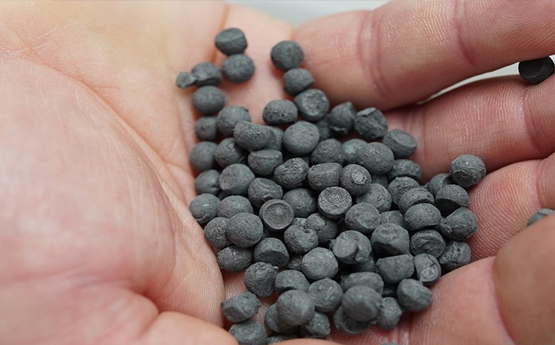
The storage system developed at Swansea uses an active material; Salt in Matrix (SIM), which is formed into beads of various shapes and sizes, depending on the application needed.
To store and release the energy, a specific process needs to take place:
- Firstly, warm, dry air (potentially from industrial-sized exhausts, chimneys and flues) is blown across the active material, dehydrating it and chemically locking in the heat
- Then, to release the heat, moist, cool air is the blown across the material. The moisture reacts with the active material, causing an exothermic reaction, heating the air and releasing warmth
Having access to this new energy type would rely on properties having adapted central heating systems that can use this new energy source, but this also means that they wouldn’t necessarily need to be hooked up to mains gas supplies, and could help support off grid living. Alternatively, direct hot air heating systems could be powered with this energy, as are seen in large open warehouses or shops.
As long as the active material is kept dry, it can store heat indefinitely, also making it suitable for long term energy storage. This also means that the energy can be physically transported from one location to another, where it could then be used months or even years in the future; energy that otherwise would have been vented into our atmosphere.
A Challenge Within a Challenge
Developing this novel technology has not been without its own issues. In order to pave the way for the technology to be implemented as widely as possible, the team has had to address several challenges, including:
- Scaling the technology to be able to manufacture heat storage beads in industrial volumes
- Designing and manufacturing energy harvesting devices that are compatible with the majority of industrial exhausts
- Deciphering complex industrial regulatory challenges
- Developing new research to maximise the heat provided by the SIM material, to reach viable temperatures for water heating (60-80 degrees Celsius)
While addressing these problems, they have been able to produce beads of variable sizes and geometry, with custom ingredients to suit each application, while showing that the material can be charged and discharged over multiple cycles, with minimal reduction in performance.
This development process has enabled the team to progress their testing to an industrial scale, which is compatible with heat sources from a diverse set of industries.
Leading Nationally and Internationally
The project has already led to cross-European collaboration, where Swansea’s researchers have leant their expertise to produce novel materials, providing recommendations for control strategies, as well as being heavily involved in discussions on UK policy advice.
The team are also working with industrial energy users across a wide breadth of company sizes. Large companies such as TATA Steel and Sheffield Forge Masters have aided the project by supplying process data, and SMEs such as Quantaco AI and Control Systems Services have aided in system design and impact analysis.
This has resulted in an aim for every flue and chimney being used as an opportunity for free energy.
The Future of Energy Supply for Heating?
The next steps will be focused on scaling the technology even further, with the hope of developing a standardised ‘battery’ system, that could power central heating systems.
This system could be housed externally to properties, with an automatic delivery system that recognises when energy levels are low.
This would result in an energy order being placed, where a company can easily swap out the depleted batteries for fully charged ones, resulting in an uninterrupted energy supply, on par with current service levels.