Could yesterday's electronics become tomorrow's technology?
Recycling is now a routine part of daily life. Food waste, cardboard packaging and plastic bottles are regularly sorted and collected, helping to reduce landfill and conserve resources. Yet electronic waste presents a growing global challenge.
In 2022 alone, the world generated a record 62 million tonnes of e-waste, but less than a quarter was documented as being formally collected and recycled. But what happens to the valuable materials hidden inside electronic products?
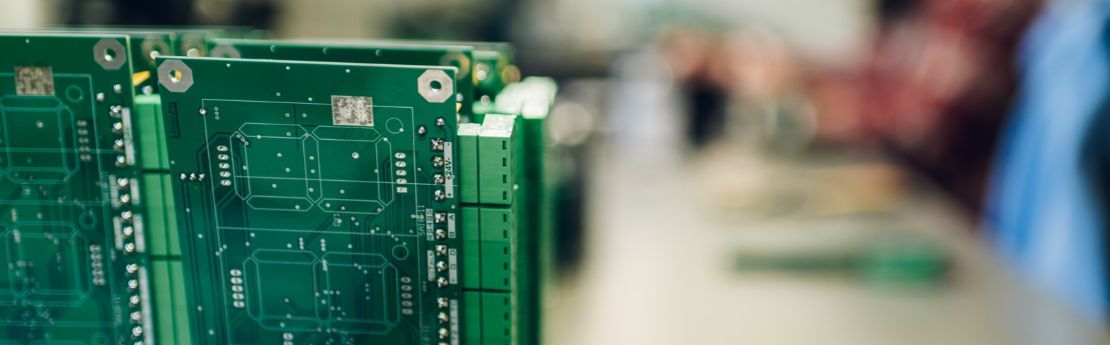
From mobile phones and wearable devices to smart packaging and sensors, modern electronics contain precious materials that are often difficult to recover once a product reaches the end of its life. Many existing recycling methods rely on harsh chemicals or energy-intensive processes, creating environmental challenges of their own.
Researchers at Swansea University set out to tackle this problem, developing an innovative approach that could transform electronic waste from a disposal problem into a valuable resource.
Rethinking how we use precious materials
The origins of Ail Arian can be traced back to research carried out at Swansea University's Welsh Centre for Printing and Coating (WCPC).
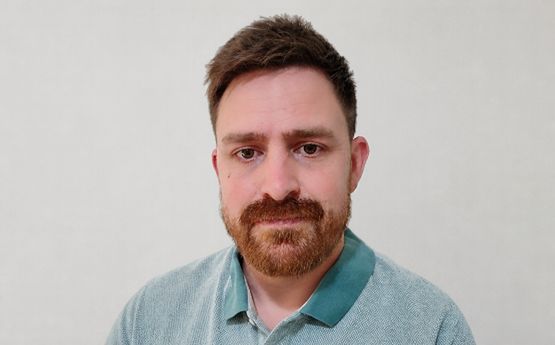
For more than a decade, Dr James Claypole, Founder and CEO of Ail Arian, worked with colleagues to develop advanced materials and printing technologies for the growing field of printed electronics, where specialised inks are used to create electronic circuits and components directly onto surfaces such as paper, plastic and textiles. One project in particular sparked a new line of thinking.
In 2018, the WCPC researchers were developing printed heating elements for garments designed to help elite athletes prepare for the Tokyo Olympic Games. As the project neared completion, the team began considering what happens to the valuable materials contained within these products when they reach the end of their useful life.
The answer revealed a significant challenge. Precious metals such as silver are commonly used in printed electronics because of their excellent conductivity yet recovering them efficiently and sustainably remained difficult.
Rather than accepting this as an unavoidable consequence of manufacturing, the team began exploring whether electronic materials could be designed with recycling in mind from the very beginning.
Designing electronics for a circular economy
The result was a unique silver conductive ink designed specifically for recycling, allowing valuable materials to be recovered and reused.
Unlike traditional recycling approaches, the patented process uses non-toxic chemicals and magnetic techniques to extract silver from printed electronic products. The recovered silver can then be reused directly in the production of new conductive inks, creating a closed-loop system that significantly reduces waste.
Pilot studies at Swansea University have shown impressive results, demonstrating silver recovery rates of over 80% from paper substrates and more than 95% from plastics.
From laboratory research to commercial impact
Recognising the technology's commercial potential, Dr Claypole participated in Innovate UK's ICURe programme, undertaking extensive customer discovery and market validation activities. This ultimately led to a recommendation being made to maximise impact by establishing a spin-out company. As a direct result, in October 2024, Ail Arian Ltd was founded.
The company's name, which translates roughly as "second silver" or "renewed silver" in Welsh, reflects both its Welsh roots and its commitment to creating a more sustainable future for electronics manufacturing.
Today, Ail Arian operates from the Bay Technology Centre in Port Talbot, where the team is focused on scaling production, expanding its product portfolio and supporting more sustainable manufacturing practices across industry.
This innovation represents an important step towards a more circular economy, where materials remain in use for longer and fewer resources are lost at the end of a product's lifecycle.
The company’s impressive technology enables silver to be reused rather than discarded, the process now has the potential to reduce associated carbon emissions by up to 70-75% while helping manufacturers minimise waste and retain valuable resources.
Looking ahead
Ail Arian's progress has already attracted national attention. The company has been shortlisted for major start-up awards and was selected as one of only three Swansea University spinouts to showcase its technology at the UK Global R&D and Science Investment Summit at the Royal Society in London.
Its success demonstrates how university research can move beyond the laboratory to address real-world challenges, create environmental benefits, support economic growth, and help industries transition towards more sustainable ways of working.
As demand grows for greener technologies and more responsible manufacturing, Ail Arian is showing how innovative research can help ensure that the valuable materials used today continue to power the products of tomorrow.
To discuss the commercialisation potential of your own innovation, or how we can support your entrepreneurial journey, please contact our IP & Commercialisation Team at innovations@swansea.ac.uk.