Economics and International Finance, MSc

Discover Swansea at our next Open Day

Book your place today
Students

Course Overview

Our MSc in Economics and Finance is designed for students who want to understand how economic forces shape financial systems, asset prices and institutional decision‑making. The programme provides rigorous training in advanced economic analysis, applied financial modelling and quantitative methods, giving you the tools to interpret market behaviour and evaluate financial risk in real‑world settings.

You will develop the technical skills needed to work confidently with financial datasets, valuation models and econometric techniques used in professional finance. The programme places a strong emphasis on data‑driven decision‑making, enabling you to assess investment strategies, analyse market dynamics and understand the macro‑financial environment in which firms and institutions operate.

The curriculum reflects the evolving structure of global finance, including financial integration, market volatility, monetary policy transmission and the role of regulation in maintaining financial stability. Specialist modules in areas such as corporate finance, derivatives, portfolio management and financial risk align your learning with industry practice and provide practical analytical experience.

An MSc in Economics and Finance opens pathways to careers in global financial markets, banking, asset management, economic consultancy and policy institutions concerned with financial stability and regulation. The programme is also well suited to those considering doctoral research in finance, financial economics or related fields.

Throughout your studies, you will strengthen your quantitative, analytical and problem‑solving skills, developing the confidence to interpret evidence, assess financial and economic developments and provide clear insight in professional contexts.

Why Economics and International Finance at Swansea?

You will study on our Singleton Park campus, set in parkland overlooking Swansea Bay. It’s a supportive and welcoming place to learn, with space to focus and access to a friendly academic community.

Economics at Swansea builds on a strong undergraduate reputation and consistently ranks highly for academic support, learning opportunities, overall positivity, and student satisfaction, with solid NSS results across teaching quality, organisation, academic support, and student voice. These strengths also benefit postgraduate students by ensuring high-quality teaching, strong academic guidance, and an excellent learning environment, while ongoing improvements to feedforward practices further enhance the support available for advanced study. 

Swansea’s Economics Department is part of the School of Social Sciences’ Industry Advisory Panel, which brings together academic staff and regional employers. This engagement helps ensure the programme remains aligned with labour‑market needs and gives you greater awareness of local and national career opportunities.

Postgraduate students benefit from a research-led environment in which academic staff combine expertise in economic analysis with applied work on financial markets and policy.

At Swansea you can:

  • Tailor your degree through a portfolio of finance-focused optional modules
  • Learn from lecturers with research and industry experience in financial economics, risk analysis, and policy
  • Study within an international cohort that brings diverse financial and institutional perspectives

Your Economics and International Finance Experience

The programme begins with advanced training in economic theory and econometrics, providing the analytical foundations for financial modelling. As you progress, you will specialise through modules in finance that develop skills in asset valuation, portfolio analysis, derivatives and market risk. Teaching is research‑informed and practice‑oriented. You will engage with financial datasets, evaluate real‑world market developments and apply quantitative techniques to problems faced by financial institutions and policymakers.

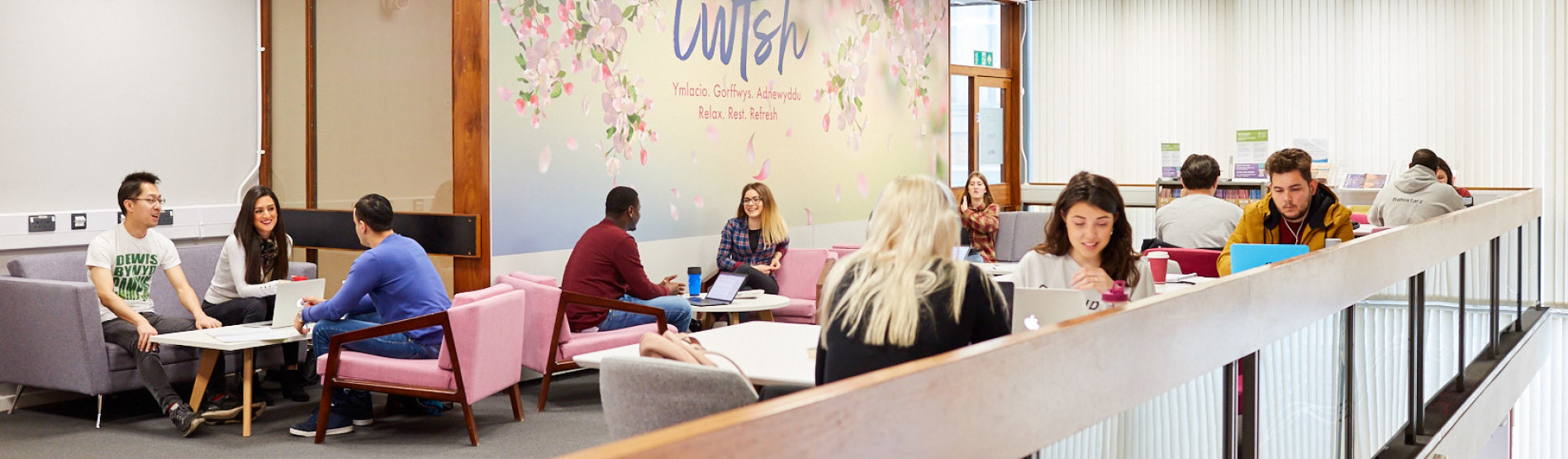
We believe that students thrive academically and personally when they feel connected, supported and valued within their learning environment. Our approach includes a close relationship with the Economics Society, encouraging you to take part in co‑curricular activities, networking events and peer‑led initiatives. A dedicated staff liaison supports the Society, helping to align activities with departmental goals and ensuring meaningful opportunities for involvement.

Collaborative learning is embedded throughout the programme. You will work on group projects and presentations that help you develop teamwork, communication and leadership skills while fostering peer interaction and mutual support. Master Classes give you the chance to work in small groups on applied problems and case studies, guided by academic staff. These sessions promote deeper engagement with the material and encourage you to learn from the diverse perspectives within your cohort.

Together, these elements create a vibrant and inclusive student community, where collaboration, peer support and shared academic experiences help you feel part of a connected and supportive learning environment.

Economics and International Finance Employment Opportunities

Graduates of MSc Economics and Finance are prepared for analytically demanding roles in the financial sector and related fields. Typical career destinations include:

  • Financial Analyst
  • Risk Analyst
  • Investment Analyst
  • Derivatives Trader
  • Economic Consultant
  • Central Bank or Government Economist
  • Data Analyst in Finance

The combination of advanced quantitative skills, financial market knowledge, and applied analytical training ensures that graduates are well positioned for both professional employment and further academic study.

Modules

We're currently reviewing our curriculum to enhance your learning experience and embed skills that will benefit your future career. This means that some modules may be subject to change.

Entry Requirements

We consider all applicants on their own merits and welcome applications from students with a wide range of qualifications.