Geographic Information and Climate Change, MSc

Discover Swansea at our next Open Day

Book your place today
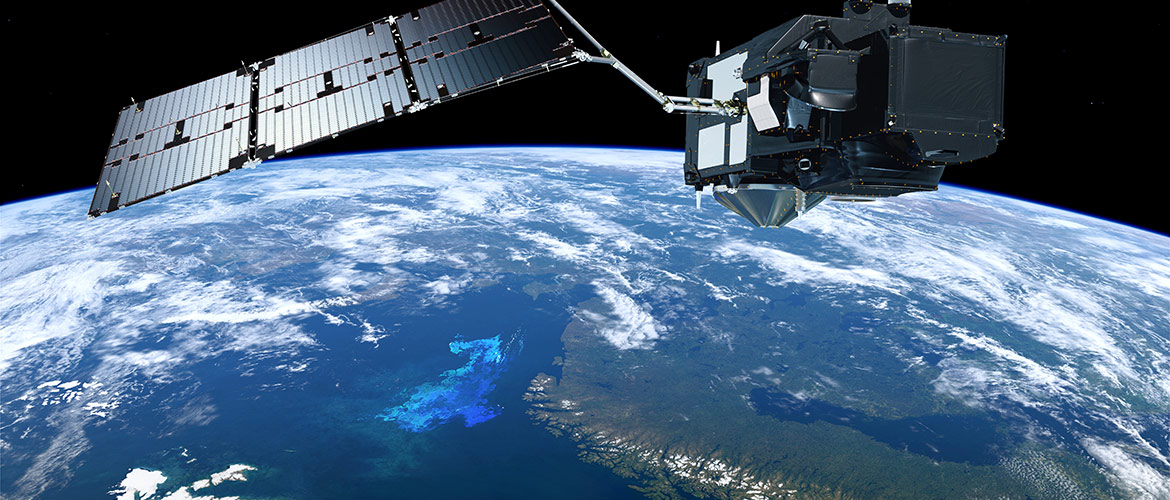
Copernicus satellite

Course Overview

The MSc in Geographic Information and Climate Change provides cross-disciplinary training in the scientific principles of Geographic Information Systems (GIS), satellite remote sensing and Earth system modelling, alongside key aspects of climate change science. 

You will focus on the technical applications of GIS and Earth observation while exploring past, present and future patterns of environmental and climatic change at global and regional scales. 

By the time you graduate, you will have hands-on experience working with GIS and remote sensing technologies, supported by a broad understanding of the scientific issues that underpin climate change. 

Your learning is enriched by the combined expertise of our Geography and Biosciences teams, whose research spans geographic information science, environmental and climate dynamics, marine and ecosystem biology, and sustainable development.

Why Geographical Information and Climate Change at Swansea?

  • Top 201-250 in the World for Environmental Sciences(QS World University Rankings 2025) 
  • 90% of our research outputs have been recognised as world-leading and internationally excellent - Research Excellence Framework (REF) 2021 
  • 100% of the environment was rated as world-leading and internationally excellent - Research Excellence Framework (REF) 2021 

Your learning will be enriched by excellent connections with industry, government and third sector organisations, giving you valuable opportunities to engage with experts working on real world environmental challenges.  

Throughout the programme, you will benefit from hands-on, experiential learning, from laboratory work and environmental modelling to immersive field courses, ensuring you develop practical, job ready skills that employers value.  

All of this is supported by a close-knit academic community, where small cohort sizes, regular workshops, pastoral tutorials and exceptional staff engagement create a friendly, supportive environment in which you can grow and thrive. 

Your Geographical Information and Climate Change Experience

Over the course of your studies, you will develop a deep understanding of the scientific principles underpinning geographic data, climate change and environmental dynamics.

Your learning is supported by exceptional computing facilities, including fifteen dual‑processor workstations for Earth Observation, a 20‑node multiprocessor Beowulf cluster, and the Department’s IBM Blue Ice supercomputer, which is used extensively for climate and glaciological modelling. These advanced resources ensure that you gain hands‑on experience with the tools and technologies used across the geospatial and environmental sectors.

Regular workshops and networking opportunities with researchers and practitioners further strengthen the sense of community within the programme, helping you build confidence, professional purpose and a strong sense of belonging.

By the time you graduate, you will have developed the practical problem solving abilities, analytical expertise and communication skills needed to succeed in a wide range of GIS, environmental and climate related careers.

Geographical Information and Climate Change Careers

Graduates of the MSc in Geographic Information and Climate Change are highly sought after across the environmental, geospatial, consultancy and public sectors. The combination of advanced GIS skills, remote sensing experience and climate expertise prepares you for a wide range of technical, analytical and specialist roles. 

Graduates of the MSc in Geographic Information and Climate Change are well equipped for roles such as: 

  • GIS & Remote Sensing Specialist 
  • Climate Change or NetZero Consultant 
  • Climate Risk or Adaptation Analyst 
  • Environmental Data Scientist / Modeller 
  • Drone / Earth Observation Technician or Project Lead 
  • Policy, Conservation or Sustainability Officer 
  • Researcher or PhD Candidate in Climate or Earth Observation 

Typical employers include environmental consultancies, government agencies, NGOs, utilities companies, research institutes and geospatial technology firms. 


"Thank you for a great year under tough times. I really enjoyed the course and expanding my geographical knowledge. The two modules that were most challenging but the most beneficial to me were the GIS module and the modelling earth systems (hydrology).

The dissertation was extremely challenging. However, the support given throughout was fantastic, and I couldn't be more thankful.

Despite the second lockdown and the doom and gloom on the job markets, I have secured a contract job for a company called Cyient as a GIS Technician mapping land use changes for small scale rural and agricultural businesses. The project is for DEFRA for a period of 6 months, but hopefully I can progress and find another similar role after this.

Owen Lauder | GIS Technician

“I’d like to thank everyone in the department for running a course that has enabled me to get a job I love. It wouldn’t have been possible without my Master’s degree!”

Rhys Jones | Graduate Statutory Orders Specialist

Modules

We're currently reviewing our curriculum to enhance your learning experience and embed skills that will benefit your future career. This means that some modules may be subject to change.

Entry Requirements

We consider all applicants on their own merits and welcome applications from students with a wide range of qualifications.