Mohamed Darwish
PhD Electrical Engineering
Class of 1981
For those who don't have a technical background, how would you explain what power semiconductors are and why they're so important?
Power semiconductors are very important, it’s the fastest growing segment in the electronics semiconductor industry. You can divide the semiconductor industry roughly into two different segments; one is the digital world for example microprocessors, you can call it the brain, but then you need the muscle to turn things on and off. This is the role of the power semiconductors; they replace mechanical relays and driving motors. They maximise energy efficiency in everything from smartphone chargers to electric vehicles. It's a very important segment that is growing very fast.
When you decided to pursue further studies, what made you choose Swansea University? 7
I was given the recommendation from one of my professors when I was trying to choose which universities to apply to. My professor studied in Southampton, he told me “while I was in Southampton, they organised a trip to a city called Swansea and there's a very good university there. It’s just on the ocean and it's lovely. So maybe I would recommend that you apply there.” And that's what happened.
What was your experience of studying at Swansea?
I enjoyed it very much. The environment was good, the location was fantastic and it's not a big city and it's not small town. It's a happy medium, and all the facilities were there. Also, I was lucky to meet Professor Ken Board the first day I arrived when I visited the Department of Electric and Electronic Engineering. There was a coffee room, and he was drinking coffee with another member of the staff, Mr. Alan Evans. We met and he explained to me what he was trying to do and I got really excited about joining his efforts. Even though I am mostly based in the USA now, I still love to come to Swansea. We have a strong attachment there. Our two children were born in Swansea.
How influential was Professor Ken Board in terms of what you then went on to do?
Extremely influential. When we first started on projects or research, it was not power semiconductors. But Ken had very good vision. He anticipated the importance of power semiconductors, and I think Swansea was the first university in the UK to have really serious effort in this area. That was very exciting because we did very interesting work together during my time at Swansea. It was Ken's idea to get into this area and I just followed him. He had a very good programme. Even after I graduated and came to the US and I got to know the leading-edge universities in the US, like Stanford, I think Ken’s programme was very competitive to what Stanford was offering at this time.
You spent time working across the industry before founding your own company.
Was starting a business something that you always had in mind or did that come after?
What drew me to the USA was the opportunities to work in places like AT&T Bell Laboratories. Bell Labs is the place where the transistor was invented and where the laser was invented, it's a very important institution. So that was the big thing that drew me to work in the States. Starting a business was in the back of my mind, but as time went by, I think it became clearer, especially after I moved to the Silicon Valley area. In Silicon Valley, it's what many are doing - having your own business. This is very normal and encouraged and in a way it's easier to do it here.
What was the driving force to you starting your own business? How did that happen?
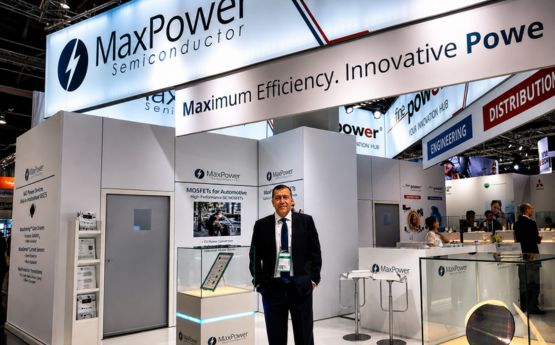
As you gain experience and you see the demand on the market, I think you start to see opportunities or see that maybe the company that you're working for is not focusing on the right area or there's market opportunities elsewhere. When you start evaluating these things, it becomes a good idea to have your own company. Of course, it's a risky, because not every start up makes it. I think the odds are maybe 1 in10 start-ups make it. The odds are not in your favour, but if you have a really strong conviction and really good ideas, and with God's help, then you can do it. You also need good people around you. Interestingly my co-founder in MaxPower Semiconductors is also a Swansea graduate, Dr. Jung Zheng. He is also one of Ken’s students, but he graduated maybe five or six years after me. In the early days of starting the company my son Amr who was born in Swansea and received both engineering and business degrees joined the team and was instrumental in Maxpower’s success.
In Ken's book he said that it was continuous innovation that helped your company become successful. Would you say that is true?
The sector doesn’t stand still. It is always developing and looking for new products or higher efficiencies, so as a company in that sector you need to keep developing. We invented so many different technologies in the power area, particularly in the power MOSFET (Metal-Oxide-Semiconductor Field-Effect Transistor) area that provided very high efficiency transistors and applications. We also have inventions in the wide band gap semiconductor area such as silicon carbide. I don't have the exact number of patents, but I think they exceeded more than 150 US patents and international patents. I think Swansea University is a leader in the Wide-Band-Gap sector. The Centre for Integrative Semiconductor Materials (CISM) is using different kinds of semiconductors other than silicon, like silicon carbide or gallium nitride, which have more advantageous features such as, it can withstand much higher breakdown voltage or temperature. There is continuous development, and growth in this area and Swansea is at the forefront of the research.
What led to the decision for you to sell the company to Vishay?
That's the normal way of startups in the USA, after you develop the technology, you prove the success, have the business model and you start generating revenue. Then you face the question; what's next? So, either you want to expand, maybe you're going to borrow more money and get more investment. Or you try to go public, in this case it takes some effort to go public and be listed on the NASDAQ. Either way, this dilutes the ownership of the company, so you end up owning less of it. The other route is if there is a big company that lacks what you have, so instead of them developing it themselves, spending huge sums of money and wasting many years of effort, they just acquire that company.
That second option was easier because we were lucky that Vishay realised that we have something that we can offer them. So, we went through with the deal and they acquired us.
If you were giving some advice to entrepreneurs. What would it be?
I would say that if you have a good idea and the enthusiasm and the endurance, then you should really pursue it because it's a very rewarding. Yeah, the risk is high, but the reward is very good and it's very exciting. It's not just the financial part of the reward, but the feel of achievement and fulfilment is great. I would encourage anyone who has good ideas and is enthusiastic about it to believe in it and work hard to get it achieved. It takes a lot of courage. Taking risk is really the name of the game here, because without risk you cannot do it. It's always easier to work for a company, which I did for many years, and live on a salary and so on. But, if you have your own company and develop the technology or achieve the idea and concepts you believe in, that's also extremely rewarding.
What excites you most about the future of the company and the industry?
The future is very bright for power semiconductors, for example, AI is powered by huge data centres and they are power hungry! Power semiconductors driving energy efficiency is one of the most important parts of data centres managing the amount of power they consume.
Power semiconductors regulate and make energy use more efficient. The role of power semiconductors is going to be extremely important in the future. Electric cars and renewable energy generation like wind turbines need lots of power semiconductors. There are unlimited opportunities for growth and new ideas and new applications. All this makes me very excited about the future of the industry.
The most interesting to me is the renewable energy sector. The world and environment are dependent on how successfully we can utilise the natural energy that exists without creating pollution. Powers semiconductors will play a key role in that. It’s an exciting area for young engineers coming into the sector.
Connect with us on Social Media