David Jarvis
BEng Materials Engineering, Class of 1997
PhD Metallurgy, Class of 2001
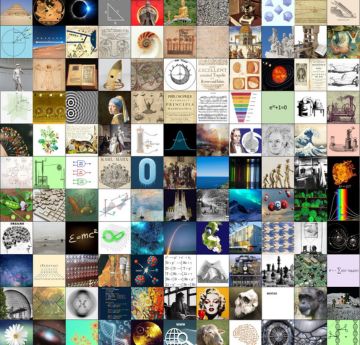
For university graduates standing at the precipice of their professional lives, entrepreneurship is often framed as a sequence of business models, market fits, and scaling strategies. However, Professor David Jarvis (BEng 1997, PhD 2001), a scientist and educator whose work bridges the gap between material engineering and historical philosophy, suggests a more profound starting point. His project, the Atlas of Human Imagination (www.davidjarv.is), serves as a visual and conceptual roadmap for the very traits that define a successful founder: imagination, discovery, and curiosity.
At its core, entrepreneurship is an act of "cartography", the ability to map out a future that does not yet exist. David’s website curated over 120 of the greatest "leaps of thought" in human history, from the architectural boldness of Imhotep to the computational visions of Alan Turing. By exploring these milestones, readers can see that innovation is rarely a solitary spark; it is a "constellation of concepts" where art, science, and philosophy intersect.
The website highlights imagination, not as a whimsical escape, but as a rigorous tool for problem-solving. Through interactive features like the "Random Historical Dinner Party" generator, which might imagine a collaboration between Freud and Turing, David prompts us to practice "corkscrew thinking." This encourages entrepreneurs to look beyond their specific silos and find inspiration in the underlying structures of history. It reminds us that discovery is often just the act of seeing an old connection in a new light.
For the modern entrepreneur, curiosity is the ultimate competitive advantage. The Atlas of Human Imagination is designed for the "globally-minded reader" who values deep thinking over fragmented information. It challenges the "stolen focus" of the digital age, offering a restorative space where curiosity can flourish without the noise of misinformation.
Crucially, the Atlas of Human Imagination is more than just a gallery of ideas; it is a vital resource for educators. With specialised lesson plans, STEAM documents, and classroom activities, the site provides teachers and professors with the tools to provoke cross-disciplinary thought and inspire independence in their students. By integrating these historical leaps into the classroom, educators help the next generation understand that the map of human thought is still being drawn, and that they, as the next wave of entrepreneurs, are its new cartographers.
Whether you are building a startup or shaping a curriculum, the Atlas of Human Imagination serves as a reminder that the most successful ventures are built on a foundation of intellectual heritage and the courage to imagine what’s next.