Biology, BSc (Hons)

Discover Swansea at our next Open Day

Book your place today
Female in lab

Course Overview

Studying living organisms in all their variety is truly fascinating, and helps us to identify critical threats and major opportunities, from the smallest scale to the largest.

Our Biology programme is designed to provide you with a solid foundation in the study of life and ecosystems. Alongside this, we will equip you with the scientific expertise and transferable skills needed to make meaningful contributions towards solving current environmental and societal challenges.

The breadth of the curriculum will allow you to develop your knowledge in relation to the biological principles that govern life on our planet, while building a clear understanding of species, habitats, and ecological processes.

Through a blend of fieldwork, lab research and theoretical study, you will develop the skills to investigate life, from a molecular scale right through to studying whole ecosystems, becoming an effective communicator and collaborative leader, that is ready to tackle global issues such as biodiversity loss, climate change and other environmental crises.

Our degree uses ethical, sustainable and innovative approaches to fully prepare you for a range of meaningful careers in biology, ecology, conservation, and environmental management.
Your Biology Experience

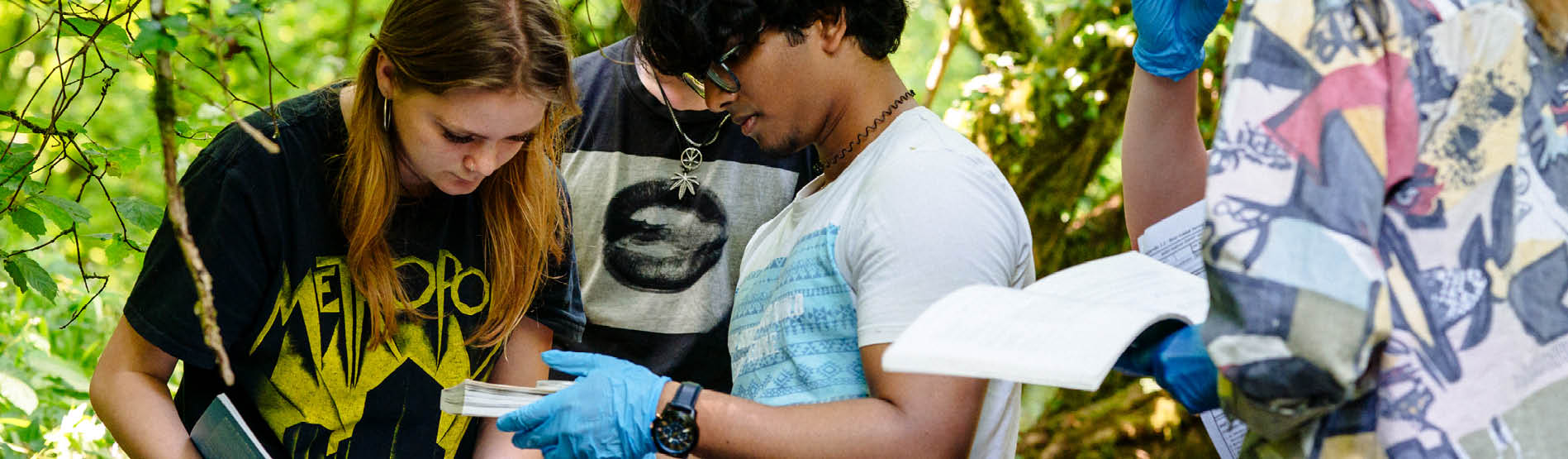
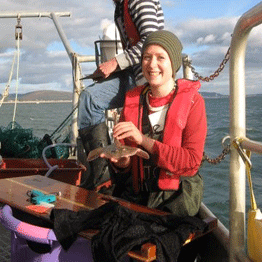
Fieldwork is an essential part of the course, allowing you to apply your learning in real-world settings, including within the Area of Outstanding Natural Beauty (AONB) on our doorstep. Lab work is also a crucial element, and you can develop your skills in our cutting-edge laboratories. As biology is so broad, you can tailor your path to be field or lab-focused.

Your first year will deliver a solid grounding in biology, encompassing the diversity of life, cellular and microbial biology, animal behaviour, ecology, evolution, genetics, and the importance of the oceans to life on Earth. You will also learn the core skills of scientific writing, and data presentation and analysis.

Your second year includes a residential field course on plant ecology, and further development of your scientific skills. This provides the perfect baseline on which to specialise in microbiology, whole organism biology or community biology and conservation.

In year three, teaching spans the entire breadth of biology, with themes ranging from molecular biotechnology through to global challenges, and opportunities to study whole organism biology, evolution, ecology and animal behaviour. You can also take an international field trip studying tropical ecology. The year will then be completed with a capstone research project.

Find out why our students love studying Bioscience at Swansea.

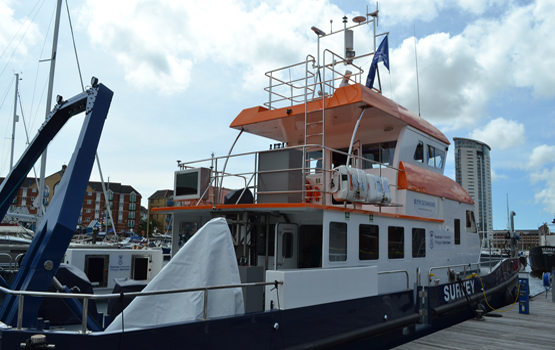
Watch the sea trials of our new catamaran-class survey vessel, the R.V. Mary Anning

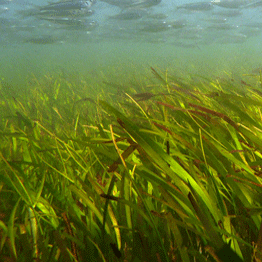
Find out about how we are helping to restore seagrass habitats

Modules

We've enhanced our modules to deliver an engaging learning experience, designed to help you develop the skills employers are looking for. Discover what's on offer and feel inspired by the modules you can study.

Entry Requirements

We consider all applicants on their own merits and welcome applications from students with a wide range of qualifications.

Entry requirements are your guide, not your barrier, and our offers will be tailored to you and what we think you can accomplish.

We know that things can change as you go through this journey. You can talk to us about your offer at any stage and we will make sure that it's achievable for you.

Careers and Employability

Our department has strong connections with national and international organisations such as Natural Resources Wales, The British Mammal Society and The National Wetlands Centre Wales, which all add value to your studies.

Our curriculum is specifically tailored to enhance your graduate employability and help you stand out to employers. Authentic, employer-focused, technical and transferable skills are interwoven into every module.

In your second and third years, you will have the opportunity to attend a careers conference, where employers are invited to provide talks and workshops, to enhance your knowledge of employment opportunities, enabling you to work towards a dedicated career goal. In your final year, you will have the opportunity to undertake professional skills modules that allow you to experience work-simulated learning, enhancing your skills ready for the workplace.

You will also have the opportunity to gain work experience with our research groups across the department, who offer short work placements, and dissertations are often aligned with employers where possible. Industrial partners also provide regular training courses. Employability is interwoven within the Personal Tutoring System, and you will be encouraged to create a personal development plan and discuss your aspirations with your Personal Tutor.

Our degrees are accredited by the Royal Society of Biology. Some of our staff are Members of the Chartered Institute of Ecology and Ecological Management, and use this network to develop the curriculum and optimise student employment skills and opportunities.

Our graduates have gone on to secure a number of professional roles, including working as:

  • Biotechnologist, Lecturer or Teacher, Microbiologist, Nanotechnologist, Ecologist, Nature Conservation Officer, Wildlife and Education Officer, Hydrometry and Telemetry Officer, Scientific Technician, Benthic Taxonomist, Writer, Animal Keeper, Animal Physiotherapist, Soil Scientist or Crop Technician, as well as roles in Sustainability, Ecotourism, and International Organisations such as the UN, FAO, WWF, WHO and UNESCO.

Biology, BSc (Hons)

Biology with a Foundation Year, BSc (Hons)

Biology with a Year Abroad, BSc (Hons)

Biology with a Year in Industry, BSc (Hons)

Biology with a Year in Applied Research, BSc (Hons)