Course Overview
Studying living organisms in all their variety is truly fascinating, and helps us to identify critical threats and major opportunities, from the smallest scale to the largest.
Our Biology programme is designed to provide you with a solid foundation in the study of life and ecosystems. Alongside this, we will equip you with the scientific expertise and transferable skills needed to make meaningful contributions towards solving current environmental and societal challenges.
The breadth of the curriculum will allow you to develop your knowledge in relation to the biological principles that govern life on our planet, while building a clear understanding of species, habitats, and ecological processes.
Through a blend of fieldwork, lab research and theoretical study, you will develop the skills to investigate life, from a molecular scale right through to studying whole ecosystems, becoming an effective communicator and collaborative leader, that is ready to tackle global issues such as biodiversity loss, climate change and other environmental crises.
Our degree uses ethical, sustainable and innovative approaches to fully prepare you for a range of meaningful careers in biology, ecology, conservation, and environmental management.
Why Biology at Swansea?
Biology at Swansea University has a strong reputation, and draws students from all over the world. You will be based on our Singleton Park Campus, set in beautiful parkland overlooking Swansea Bay.
Your Biology Experience
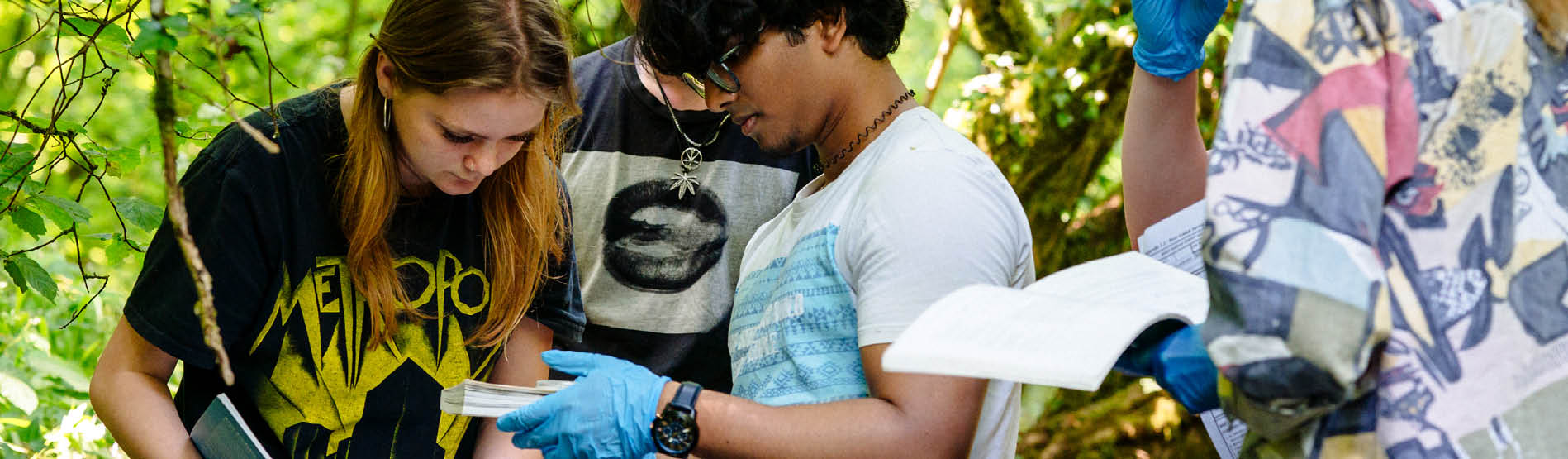
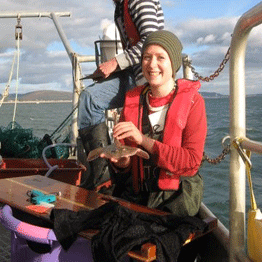
Fieldwork is an essential part of the course, allowing you to apply your learning in real-world settings, including within the Area of Outstanding Natural Beauty (AONB) on our doorstep. Lab work is also a crucial element, and you can develop your skills in our cutting-edge laboratories. As biology is so broad, you can tailor your path to be field or lab-focused.
Your first year will deliver a solid grounding in biology, encompassing the diversity of life, cellular and microbial biology, animal behaviour, ecology, evolution, genetics, and the importance of the oceans to life on Earth. You will also learn the core skills of scientific writing, and data presentation and analysis.
Your second year includes a residential field course on plant ecology, and further development of your scientific skills. This provides the perfect baseline on which to specialise in microbiology, whole organism biology or community biology and conservation.
In year three, teaching spans the entire breadth of biology, with themes ranging from molecular biotechnology through to global challenges, and opportunities to study whole organism biology, evolution, ecology and animal behaviour. You can also take an international field trip studying tropical ecology. The year will then be completed with a capstone research project.
This programme includes opportunities to undertake a Year Abroad, offering invaluable life experience.
This course also offers you the opportunity to spend a Year in Industry, in the UK or overseas, enabling you to gain valuable workplace experience. The University advocates for paid-only placements, which on average have a salary of over £20,000. Unpaid placements are considered on a case-by-case basis.
The Year in Applied Research enables you to develop advanced research skills. You will be housed in our research groups, on exchange with our partners in Exeter or Aberystwyth, or can be linked with industry, or a combination of these options.
The optional Foundation Year for this programme can give you an exciting introduction to higher education, setting you up with the skills, confidence and knowledge that you’ll need to be successful in your undergraduate degree. It’s ideal if you need a little more support
after further education, or are returning to education after a gap. Following successful completion of the Foundation Year, you will progress onto Year 1 of your BSc.