
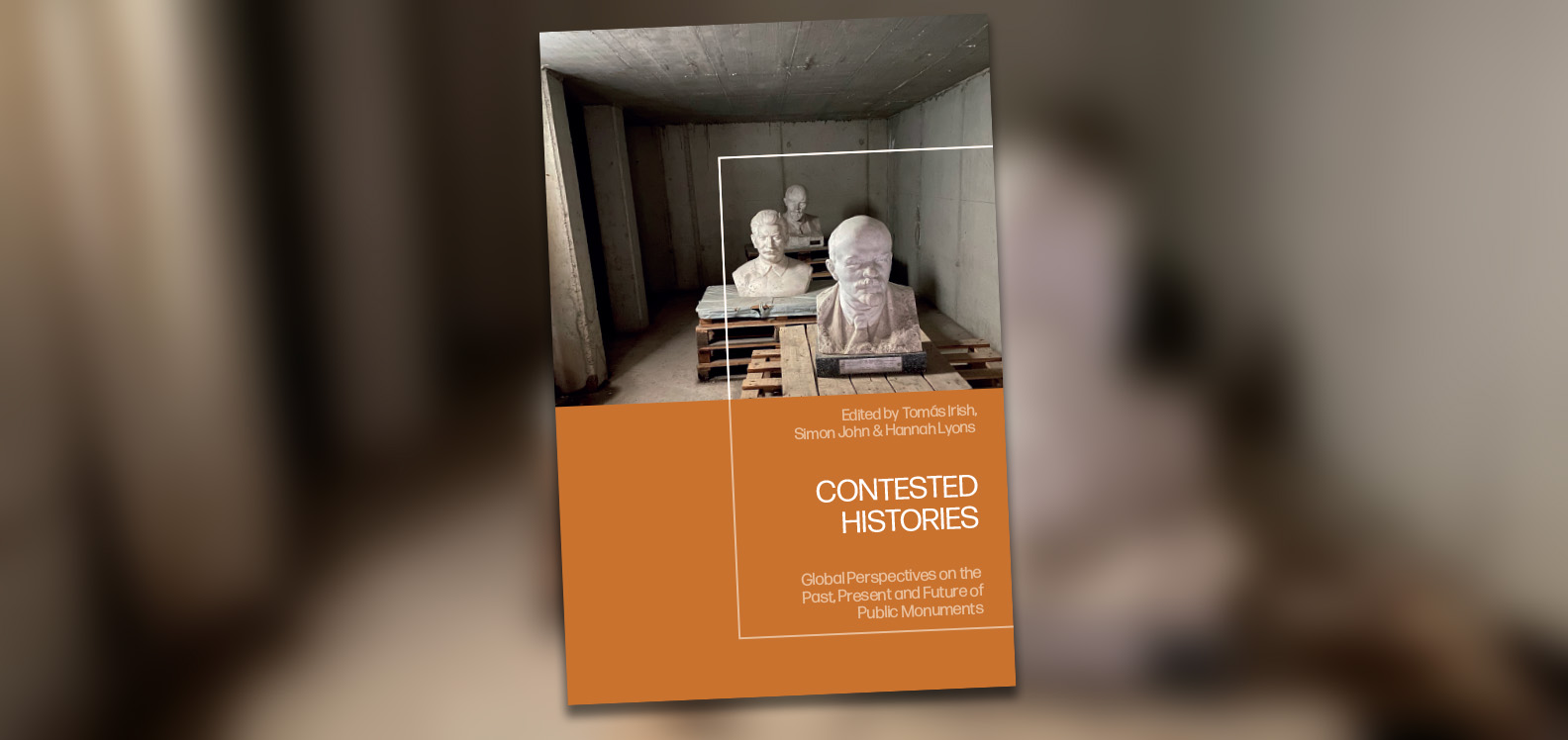
Swansea University historians have published a new book examining one of the most visible debates of the 21st century: how societies engage with monuments linked to difficult, divisive and contested histories.
Published by Bloomsbury Academic, Contested Histories: Global Perspectives on the Past, Present and Future of Public Monuments explores how communities around the world remember, interpret and debate the past through public monuments and memorials, an issue that has attracted growing public attention in recent years.
Edited by Dr Simon John and Professor Tomás Irish from Swansea University’s Department of History, alongside Hannah Lyons, a graduate of the University, the collection brings together ten essays by leading academics exploring monuments and memorials in settings including Bosnia and Herzegovina, Britain, India, Ireland, Italy, Libya, the Philippines and the United States.
The volume grew out of a major international conference on statues and monuments hosted by Swansea University in 2021, following the 2020 toppling of the statue of the slave trader Edward Colston in Bristol.
Contributors explore not only why monuments are created, but also how they are received, challenged and transformed by the communities around them.
Chapters examine responses ranging from artistic interventions and symbolic alterations to the removal of monuments, shedding new light on how societies confront difficult and sometimes painful histories in public spaces.
Dr John, Associate Professor of Medieval History and co-editor of the volume, said: “Whether it’s the statue of Rhodes in Oxford or the now-toppled statue of Colston in Bristol, monuments continue to provoke controversy in the twenty-first century. The guiding aim of this volume is to draw lessons from how past societies have responded to controversial monuments, better to understand the controversies of our own age, and how these debates might unfold in the future.”
Beyond contemporary controversies, the volume also explores how artists, activists and communities are developing new approaches to collective remembrance.
Professor Irish, Professor of Modern History and co-editor of the volume, added: “Contested Histories is an important book because it highlights how and why public monuments have generated controversies across the globe in the twentieth and twenty-first centuries. While many of these issues gained heightened public prominence in the summer of 2020, the volume shows that monuments have long histories of being contested, and that this will continue – and take new forms – in the decades ahead.”
The book has already received strong endorsements from prominent researchers in the field.
Professor Erin L. Thompson, John Jay College of Criminal Justice, said: “Contested Histories offers invaluable, deeply researched contributions to urgent debates about the meaning and future of our public monuments.”
Dr Sam Edwards, Loughborough University, said: “With chapters exploring culturally and geographically diverse lieux de mémoire, this volume will be essential reading for anyone interested in understanding the complex cultural politics bound up with commemoration and the public representation of historical events and figures.”
Contested Histories: Global Perspectives on the Past, Present and Future of Public Monuments is available in hardback and ebook.