Dr. Rhiannon Rees
PhD Business Management
Class of 2024
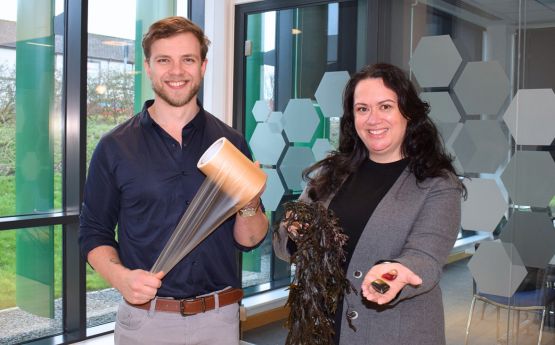
Dr Rhiannon Rees’s journey from PhD researcher to sustainability entrepreneur has been shaped by a combination of academic curiosity, commercial experience and a determination to solve practical problems. After transferring to Swansea University with her supervisors (Prof. Carl Cater and Dr Tiffany Lowe), she used her doctoral research to explore tourism, marketing and business decision-making in Wales. Those themes would later feed into the creation of PlantSea, the seaweed-based packaging company she co-founded during the lockdown period, after seeing first-hand how heavily parts of the tourism industry still rely on difficult-to-recycle single-use plastic sachets. Her Swansea experience, she says, gave her the confidence, writing skills and research grounding to turn an ambitious idea into a fundable, scalable business. Since then, she has had to navigate the realities of venture capital, scaling a science-led start-up, and leading as a woman in spaces that remain overwhelmingly male-dominated.
What made you choose Swansea to do your PhD? Did you enjoy your experience?
I actually transferred to Swansea halfway through my PhD; I switched from Aberystwyth University to Swansea. My supervisors were headhunted for the new tourism school that was opening, so I came with them.
Swansea University is a lovely university. I didn't move to Swansea because I was already quite established in Aberystwyth, but I did come down for PhD community events, or guest lectures.
Did you find any mentors or lecturers that inspired you or helped take your career in the direction it did?
My supervisors, Carl Cater and Tiffany Lowe were amazing, they really encouraged me to attend and speak at conferences, to write papers and to apply for PhD symposiums. I think that was great for my confidence in terms of public speaking and meeting other academics and PhD students.
I did travel quite widely. I went to tourism conferences in Cyprus, Australia, and Copenhagen. That was really good - to meet other people and collaborate at those symposiums.
So yeah, I'd say my supervisors had the biggest impact on me. That experience of writing and presenting is great preparation for starting a business.
When most people leave university, they look for a job, but you went straight into running a business. How did you take that shift from being a student?
I was also on a Knowledge Exchange Skill Scholarship (KESS). Those scholarships are meant to have an economic impact on Wales, so there were about 200 of us that were on that scholarship at the time in Wales. I was working with a project partner, a tourism company in Aberystwyth called Cambria Tourism. I've always been entrepreneurial. I've had businesses before the PhD, so I was quite a good fit for that scholarship because my PhD was looking at quite a practical, pragmatic subject area. I was looking at decision-making in activities and attractions in Wales, so the project partner was great because they were selling tours and experiences. My PhD covered the academic side of decision making and all the marketing theories and so forth, but it also looked at the very practical aspects of how we could sell more tourism experiences.
My PhD had an influence on my next steps, but I'd been in business before, and the PhD was like a break in the middle. I loved my PhD, but I knew I wasn't going to go into academia. I was looking for a new project, I didn't know what it was going to be, and then the whole seaweed and PlantSea thing came together in 2020 and 2021, during the lockdown.
I think the biggest thing that's come from the PhD program is confidence. There's a certain confidence that comes with having those academic achievements, and also a certain ability to write, and to get those ideas across well in a written format. So, writing business plans and writing grant applications was a less daunting process, having done a PhD, having written papers, having presented at conferences. It was less daunting, somehow.
You said the PhD was a break from working. What prompted the decision to do a PhD? How did you feel that that was going to benefit you?
I just loved the research. I did my Master's in Aberystwyth in Marketing, and I just really loved it. I loved doing the research, I loved my thesis, I loved learning and I felt very empowered by that learning experience. I did work hard, I did do well in my assignments, but it was a sense of a different part of my brain being switched on. Rather than the day-to-day running of a business, I was looking at things like marketing strategy, learning about different marketing theories, different business theories. I really enjoyed that academic aspect, and I could relate it back to my work. I just found reading studies fascinating, especially if it was something I'd noticed in the real world, or at work, or in my businesses, and I think that's the bit that I tucked into during my PhD.
I found that really exciting. Because when you're running a business, you constantly have questions, like ‘why isn't the customer buying this today?’ or ‘why isn't this new project doing well?’ or’ why are my staff behaving like this? How can I motivate them?’. Then you have all this amazing academic research, which so often relates directly to many of the problems that you actually have day-to-day in your business, and I found that really exciting.
You were studying tourism and marketing, how did you come across the Plantsea research?
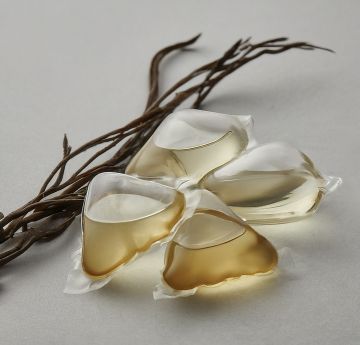
It was accidental really. It was a collision of the work of two friends and my experience as a tourist and academic interest in tourism. I have two friends that are material scientists, and they were the ones playing with the seaweed, you know: bucket science; kitchen science stuff. We were making a thin film, it was blotchy, it was dark, it didn't look very good, but we noticed it was dissolving in water, and we got to thinking maybe we could encapsulate a detergent or a shampoo into this film. We were looking for grants, and when you're applying for an innovation grant, you need to do something really innovative, which has never been done before, if you want to win the grant. So, we thought, ‘what's more innovative than laundry capsules or dishwasher tablets?’ because that was the obvious use for a film that dissolved. I'd been traveling quite a bit, and I'd been to Thailand for the first time in January of 2020, and all the hotels I stayed in were offering sachets of shampoo and conditioner, rather than a refillable bottle or even just a normal shampoo bottle. It was all sachets, and they were everywhere, in the shops, sachets of everything. It was completely normal in Thailand to buy everything in a plastic sachet.
I just thought, ‘oh wow, wouldn't it be cool if we could put the shampoo in the seaweed film and sell it as a capsule?’ because for some reason, this single dosing is big in some parts of Asia. For whatever reason, it's more convenient to people, but it just seems like a colossal waste of plastic. A lot of people don't really think about this, but those sachets are usually triple-lined with metal as well as plastic, and they cannot be recycled, or it's incredibly difficult to recycle them. The best thing that can be done, usually, is they just get melted down and made into bricks.
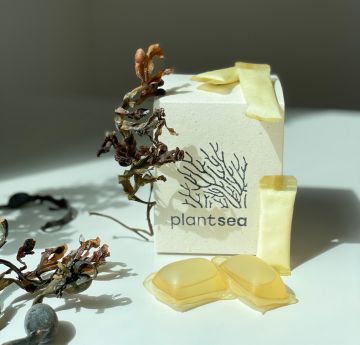
The first business plan that we wrote for PlantSea, and the first grant that we applied for, was to make a shampoo capsule made from our film that would be sold into hotels, and for tourists. That really does come directly from my experience as a tourist, and the interest in tourism that I had in my academic world.
Do you think it's difficult to convince places that rely on these single-use plastics to make the shift to take a greener alternative?
I think five years ago it was more difficult. Now, not so much. Now, there's a big trend and push in businesses to change and adopt greener practices. I think it really has changed in the last five years. There's just so much more public awareness, and the end consumer will complain to a business if they don't think they're green enough, or they're using too much plastic, and they'll complain quite loudly. It's quite interesting how businesses are saying, ‘we need to change’ and they're going to their suppliers and saying ‘what can you do about this? I'm not happy with this packaging anymore, I'm not happy with this packaging format. Can you change it, please?’
To have a business that's operating in the sustainability space, would you say that it comes with more challenges than a traditional business?
We’re disrupting a new packaging format, so yes! It's massively challenging because we’ve invented a new polymer, which is pushing for a change from the established Polyvinyl Alcohol (PVA) film into our seaweed film. It's hugely challenging, but because we're working with a quite complex supply chain, with very big potential customers, change happens slowly. They're used to working with the same materials that they have done for the last 10 or 20 years, they understand them and know how they will behave in the marketplace. However, I will say we've been very lucky and fortunate to build some strong relationships with some very big film manufacturers that are operating with all of the big brands, and we've been working with them for the past year. It's taken a year of very small-scale experiments and trials, to now build into bigger, large-scale trials.
It does take years, unfortunately, to go through these kinds of in-depth technical trials. The polymer might behave one way in a bucket, but when you scale up into industrial production you need to ensure the polymer properties remain consistent.
Are there more applications that you're interested in pursuing? Any other ways that you think that this technology can be used?
Definitely. Our first market will be laundry capsules and dishwasher tablets because we're seeing the biggest demand there. We've got dozens of brands that are interested in switching to a greener alternative, as well as a few film manufacturers.
The next market closest to us is food, because of the shift in plastic to paper. There’s quite a shift happening at the moment where plastic packaging's been replaced by paper, but they're coating the paper in plastic to give it shelf life or durability. We currently have an Innovate UK project running where we're looking at how we can laminate our film to paper. We’re also seeing there's a shift in the regulatory landscape on food, particularly in Europe. There’s quite a big push by 2030 to reduce plastic packaging in food, so that's the second market we're really focused on. And then third, I'd probably say is cosmetics. We get quite a high demand interest in the shampoo capsule, body wash capsule, even moisturisers and fake tan and all sorts to be delivered in a capsule format. In the cosmetics industry, one of their biggest marketing efforts is free samples and they always come in those little sachets that are not recyclable. There's quite a big desire within the cosmetics industry to stop giving out all these free samples that are not recyclable, and they are actively looking for new ways of doing that.
Do you think that having a business in sustainability has an extra weight of responsibility?
I feel very responsible to all our funders, because we've had so much public money in grants- there is an added pressure to deliver simply because we've had so much grant funding. All of us at the business are driven by the sustainability focus and the potential to reduce plastics in the environment. It really motivates us, so I don't think we feel any extra responsibility there. I think it just motivates us more because we want to have impact. What I'm really noticing is change in the big corporates that we work with. There are individuals there that are really motivated to drive change within their companies. You hear people say things like ‘I want to make the planet better for
my children’ or ‘I really want my company to adopt this new material, because it'll have impact for future generations’, and yes, it benefits the company but people are incredibly personally motivated, I think. my children’ or ‘I really want my company to adopt this new material, because it'll have impact for future generations’, and yes, it benefits the company but people are incredibly personally motivated, I think.
What has been the biggest hurdle in scaling up this project?
There's been different challenges at different stages. In the early days, it was hard to find the right partners, to find people who would say yes, and listen, and experiment with us - even talk to us! We had a vision, but it was hard to find manufacturers to talk to. Even academic partners wouldn't always want to talk to us, and were reluctant to let us use their equipment. I remember this one academic saying ‘I'm not letting you put that in my machine, it might explode!’, because we didn't have enough data on the polymer. In those early days, it was a lot of kitchen science and those first Innovate UK grants allowed us to gather credible data, set up labs and facilities.
We’ve had to get very focused, because back in 2023, 2024 and even 2025, we had a lot of different projects running within PlantSea for different uses of the film. We've had to really pull back and just focus on the soluble film for laundry capsules, because the biggest danger to us is that we run out of money before we've commercialised anything.
Raising funding in the last year was very, very difficult. We knew we needed to raise at least £3 million to scale with external partners and build a small demo site. We’re now manufacturing a polymer that can then be sold to big film manufacturers. That's our business model. We make the polymer, sell it to the film manufacturers that then make the film for the brands. We needed £3 million, at least, and we're operating in a market where we can't really make a small amount of film. It has to be proven to be scalable, because the customers are so big. The manufacturers of film need a tonne of material to be able to run their machine. Even a pilot machine requires 200kg. In the lab, we might make 1kg of dried extract from our extraction process in a day or a week. In order to scale up, we needed that funding. In 2025, raising investment has been really challenging, whether from venture capitalists, start-up funds or angel investors, because there has been less capital available across the market. The AI revolution, which is amazing in so many ways, is sucking up all the money as investors put their money into AI. In 2025, 70% of all VC capital went to AI. We raised £1.2 million in the end from investors - a big part of that was a crowdfund - and then we've raised just under £1 million from Innovate UK. We were also very fortunate to receive a European Innovation Council (EIC) Accelerator grant of £3.5M.
What will that funding allow you to do?
It would allow us to manufacture - so do the biorefining - at scale, taking it from small-scale production in the lab with our university partners. It'll allow us to go into much bigger reactor vessels and much bigger tanks. We need to be able to observe how our process might change at a bigger scale, and the funding will allow us to do that. These trials are up to £100,000 per trial and on top of that certification will be £100,000 per certificate when we finally go for biodegradability certification.
Where does the Seaweed come from? Is it a particular type of seaweed?
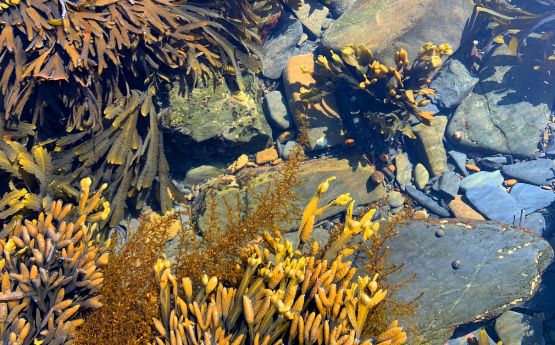
We get our seaweed from farmers and growers in Scotland and in Ireland, and that's what we aim to source long-term. There is a small but growing industry in Scotland and in Ireland. We're a member of the Scottish Seaweed Industrial Association, and we wanted to support the UK ecosystem. Different seaweeds have different properties. You've got reds, greens, and browns, and there are literally hundreds, if not thousands, of species within those three categories. We’re blending several species that come from the browns and the greens, and we've done it deliberately so it’s more sustainable and we're not reliant on a single species.
As a female leader, do you think it’s important to have stronger female representation in the boardroom?
Absolutely, and it’s become much more noticeable to me as PlantSea has grown, particularly as we have moved into the world of venture capital, science and manufacturing.
I’ve been in business for most of my working life. In my 20s and 30s I ran small businesses in Aberystwyth, and then I went back to do my PhD. During my time at university, attending conferences and meeting other researchers, I didn’t feel underrepresented as a woman. But in the VC and natural sciences worlds, I have often found myself to be one of very few women in the room.
Over the last 5 years, I've probably pitched to over 100 investors, and 80% of the time I'm pitching to predominantly male audiences. I get invited to some amazing events in Canary Wharf and all over the world, like Monaco, and I'm often the only female presenter. To be fair, there are lots of female founders in biomaterials, but not across all industries, or across all packaging solutions. But across STEM and senior leadership more broadly, women are still underrepresented. You see it in practical ways too. When we advertise for senior roles, such as a chairperson, the majority of applications still tend to come from men.
I was recently talking with a woman from the Female Founders Task Force – a government-backed organisation that tries to get more funding to female founders - and she mentioned that their research found when a woman pitches for money, the questions they get are much more risk-focused. However, when men pitch they get way more questions around growth and opportunity.
As a female leader you do have to be resilient, and I think part of the academic training - going to conferences, presenting and being constructively criticised - has really helped me with that.
Do you think that more still needs to change to make business and leadership a bit more accessible?
Yes, I do. I just don't have the answer, but I think it’s important to create opportunities where we can. At PlantSea, for example, we're actively trying to encourage more female lab technicians and researchers, because our lab environment is still quite male-dominated.
I think it's just so important to have a much more diverse workforce, and to achieve that we need to address some structural issues around childcare and the pressures that many women feel during different stages of their careers. I spoke about this recently at a feminism seminar at UCL, where I was asked to reflect on what feminism means in my industry. I wanted to be honest about the realities of senior leadership.
I wanted to be honest about the realities of senior leadership. If you are a CEO or in another senior role, there can be travel, long hours, significant responsibility and a great deal of pressure. That can be difficult to balance with family life unless you have an amazing support system in place. It’s not just a matter of good planning – you’ll be really torn in terms of responsibilities.
It is possible to have a family and be in a position of seniority and many women with children do hold down senior roles. But the cost and availability of childcare early on can make it harder for parents to progress at exactly the point when they might otherwise be moving into more senior roles. If childcare was more accessible and affordable for under-fives, I think it would make a real difference — for both parents, you know?
What are you excited about for the future of your business, and what's coming next for you?
We are in an exciting phase now, because we're growing and we're scaling. We've got all of these milestones! we're making 200kg of polymer by June, and we're making a tonne after that. We'll then be getting film on a roll. We've had this goal for such a long time, to have film on a roll - a full-size industrial roll. This means we can make capsules at scale, and there are brands that we're working with that could launch their capsules next spring.
That's really exciting, to think that in a year we could actually have that film being sold to end customers. I’m so looking forward to all the team expansion that we've got planned and to becoming a proper business rather than a startup.
Connect with us on Social Media