About
Professor Yuan is a member of staff in the Department of Mathematics at Swansea University.
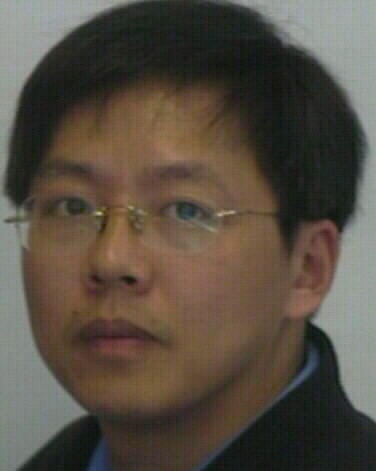
Professor Yuan is a member of staff in the Department of Mathematics at Swansea University.
This module introduces the fundamental methods of coordinate geometry and trigonometry for describing and manipulating geometric shapes. Students will learn to represent lines, circles, and other curves using different coordinate systems, including Cartesian, parametric, and polar forms, and will apply trigonometric principles to solve problems involving angles, distances, and periodic phenomena. Furthermore, the module covers vectors and matrices as tools for describing linear transformations and solving systems of equations and inequalities, thereby linking algebraic techniques to geometric interpretations.
Game theory is about strategies for making decisions, in cases where there are two or more players. The complication is that the possible choices for the other players may influence a particular player's choice of strategy. Economics has many examples of the application of game theory, but it has also been applied to areas as diverse as global politics (e.g. the Cuban missile crisis) and evolutionary biology (e.g. the hawks and doves game). Optimisation is about finding the optimum strategy (e.g. maximising profit for a company) by maximising or minimising a function in a specified domain. Again it has applications in economics, but it has also been used in engineering design (e.g. genetic algorithms were used to design the superconducting magnets in the CERN particle accelerator) and molecular biology (modelling shapes of molecules by minimising energy).
The module will introduce students to section 3 of the Institute and Faculty of Actuaries CS2 syllabus. This module serves as an introduction to the theory of Markov processes, in both discrete and continuous times. A special attention is drawn to the theory of Markov chains and Markov jump processes (including the Poisson process) and their applications.
A research project selected from an area of expertise of a member of staff in the Department of Mathematics. It will enable the students to develop an enquiring, analytical critical and creative approach to problem identification and solution. The project will typically focus on a subject area related to one of the taught modules in the MSc scheme.
The module will introduce students to section 3 of the Institute and Faculty of Actuaries CS2 syllabus. This module serves as an introduction to the theory of Markov processes, in both discrete and continuous times. A special attention is drawn to the theory of Markov chains and Markov jump processes (including the Poisson process) and their applications.
The module will introduce students to section 3 of the Institute and Faculty of Actuaries CS2 syllabus. This module serves as an introduction to the theory of Markov processes, in both discrete and continuous times. A special attention is drawn to the theory of Markov chains and Markov jump processes (including the Poisson process) and their applications.
A research project selected from an area of expertise of a member of staff in the Department of Mathematics. It will enable the students to develop an enquiring, analytical critical and creative approach to problem identification and solution. The project will typically focus on a subject area related to one of the taught modules in the MSc scheme.
2003 - 2004
2004 - 2008
2008 - 2011
2011 - 2016
2016 - Present
2015 - 2019
2019
Jilin University, Changchuan, China
2018
Sichuan University, Chengdu, China
2018
University of Minnesota
2018
University of Bielefeld
2017
University of Bielefeld
2017
Wuhan University, Wuhan, China
2016
Beijing Normal University, Beijing, China
2016
Tu Dresden, Dresden
2016
Jiangsu Normal University, Xuzhou, China