
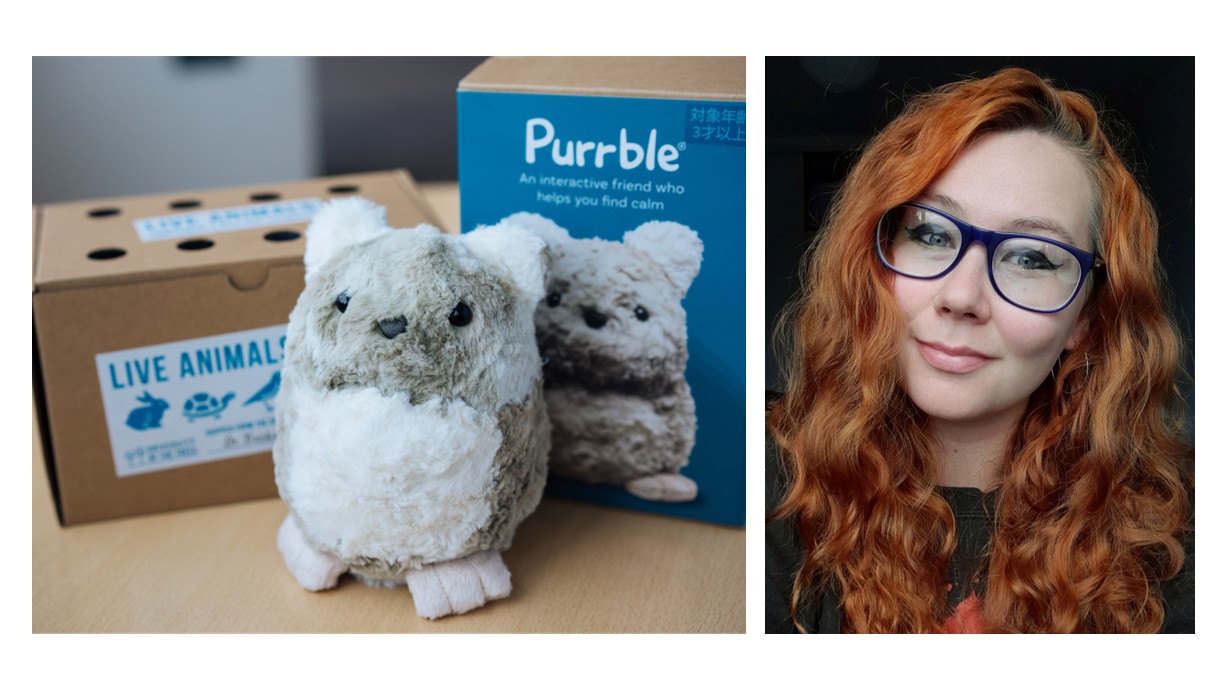
An interactive robotic plushie called Purrble could improve anxiety and depressive symptoms in LGBTQ+ young people.
Researchers found that young people – aged between 16 and 25 - who interacted with the robot were much more likely to see improvements in symptoms of anxiety and anxiety, and reduced difficulties with emotion regulation abilities. These results were compared with a control group who had access to a personalised safety plan – a tool commonly used by mental health practitioners to help navigate urges of self-harm.
The findings, which saw them repeatedly survey more than 150 teens with thoughts of self-harm for 13 weeks, have just been published in Nature Medicine.
Lead author Dr A Jess Williams, from the National Centre for Suicide Prevention and Self-Harm Research based at Swansea University Medical School, collaborated with colleagues from King’s College London and the University of Nottingham on the study as part of the Digital Youth programme.
Purrble, which was co-designed with children, simulates a fast heartbeat through vibrations, encouraging its user to pet and stroke it to calm it down. It moves from small squeaks to gradually starting to purr, helping distract the young person from challenging emotions and to ground themselves.
Over time, Purrble has been shown to help users better regulate their own emotions. By exercising this skill, the device acts as a transdiagnostic treatment – targeting the emotional dysregulation that sits at the centre of many mental ill-health diagnoses.
In the UK, an estimated 65.3 per cent of LGBTQ+ youth report a history of self-harm. Over the past eight years, Dr Williams’ research has focused on understanding self-harm among LGBTQ+ young people, with particular interest on the design, evaluation, and implementation of interventions to reduce risk and improve mental health outcomes.
She led the randomised controlled trial examining the effects of Purrble among LGBTQ+ young people aged between 16 to 25 with lived experience of self-harm, compared with treatment as usual (safety plans). It discovered that access to Purrble significantly improved emotion regulation and reduced symptoms of anxiety and depression.
Dr Williams said: “Lesbian, gay, bisexual, transgender, queer, or questioning (LGBTQ+) young people experience disproportionately high rates of poor mental health outcomes, including depression and anxiety, self-harm, and suicide.
“Difficulties with emotion regulation are strongly associated with the development and maintenance of a range of mental health conditions, including self-harm thoughts and behaviours.
“Despite the lack of statistical evidence for self-harm movement, these findings are really exciting. Purrble doesn't require any explicit training, therapist contact, and can be used when and however the young person wants - making it very versatile to the needs of the young person."
The researchers now believe that this effective at-home treatment could be scaled up to run alongside more traditional mental health therapies to reach more at-risk children.