
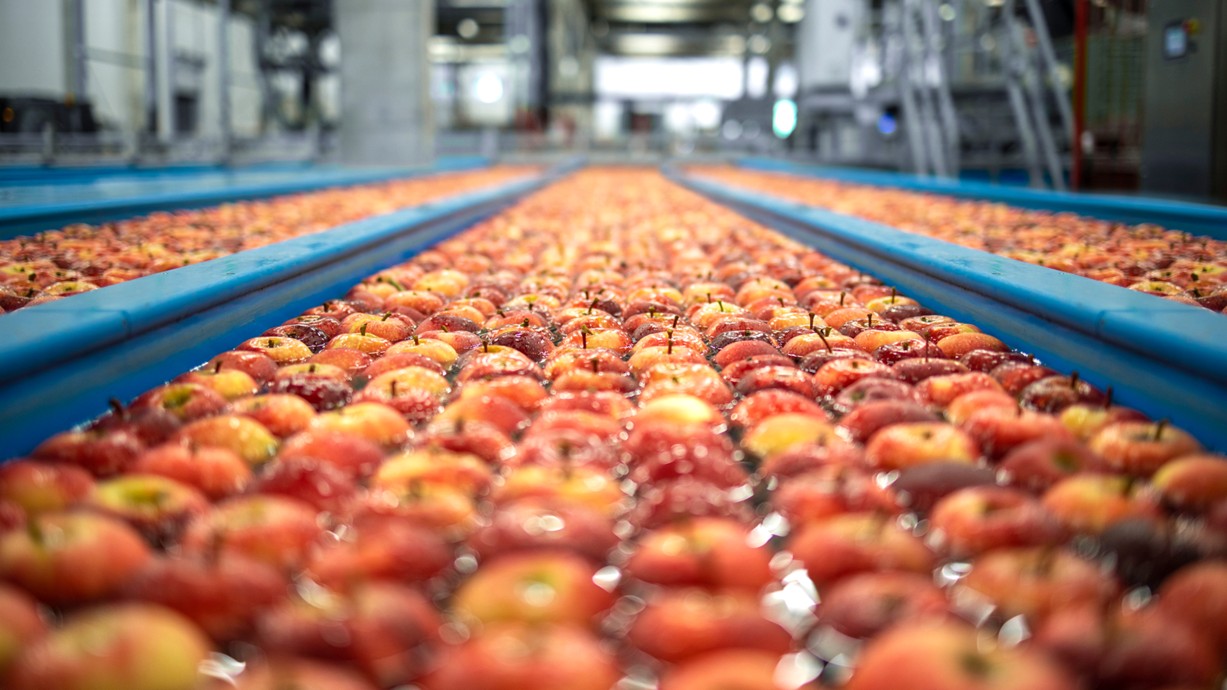
The Swansea University and BIOVIT team is turning waste into wellness through natural Vitamin C innovation. Credit: Aleksandar Malivuk | Shutterstock.
Swansea University is partnering with Tenby-based start-up BIOVIT to investigate whether food-processing waste can be turned into a new source of natural Vitamin C — offering a sustainable alternative to synthetic ingredients widely used in supplements and fortified foods.
As part of an Innovate UK-funded project, the team is examining various forms of agricultural and food-processing waste to assess the potential for recovering vitamins and minerals. BIOVIT's initial research showed that up to 60% of the vitamins and minerals in fruit and vegetable material are lost during processing, creating a valuable opportunity for nutrient recovery.
Researchers from Swansea University’s Natural Products BioHUB are leading the scientific development and extraction work in collaboration with BIOVIT.
The project aligns with UK and Welsh Government ambitions around net zero, resource efficiency and circular economy innovation, while contributing to improved food and nutritional security. If successful, it will demonstrate how food-processing waste can be converted into high-value nutritional ingredients, opening new opportunities for circular manufacturing in Wales.
The collaboration follows BIOVIT’s recent success at the IFE Manufacturing Ingredients Awards 2026, where its Circular Vitamin C concept won both the Enabling Technologies for Ingredients award and the overall Innovation of the Year prize.
Dr Farooq Shah, Director of the Natural Products BioHUB at Swansea University, said: “We're taking something traditionally viewed as waste and exploring whether it can become part of the solution to some of the biggest challenges facing modern food systems. By connecting BIOVIT’s commercial ambition with Swansea University’s expertise in natural products, chemical process engineering, green chemistry and biotechnology, we can help turn food-processing waste into high-value ingredients with real-world applications. It is a strong example of how university–SME collaboration can support circular manufacturing, strengthen regional supply chains and help position Wales at the forefront of the green economy.”
Ky Wright, Founder and CEO of BIOVIT, said: “We’re on a mission to improve the health of people and the planet through natural vitamins and minerals. Most supplements and fortified foods still rely on artificial vitamins, often produced through synthetic processes. We believe there is a better way. Working with Swansea University gives us access to the research expertise needed to develop natural Vitamin C from fruit-processing waste. If successful, this project could help us create a new class of circular, clean-label ingredients for food, drink and supplement brands.”
Chedly Tizaoui, Professor of Chemical Engineering at Swansea University, said: “What makes this project particularly compelling is the combination of scientific challenge and commercial relevance. It allows us to address a real-world problem rooted in local waste streams, while applying advanced chemical engineering principles and green extraction approaches to recover valuable micronutrients from fruit-processing residues. Our goal is to establish a robust, scalable route to natural Vitamin C that supports circular production and wider food innovation.”
Find out more about the School of Biosciences, Geography and Physics.