
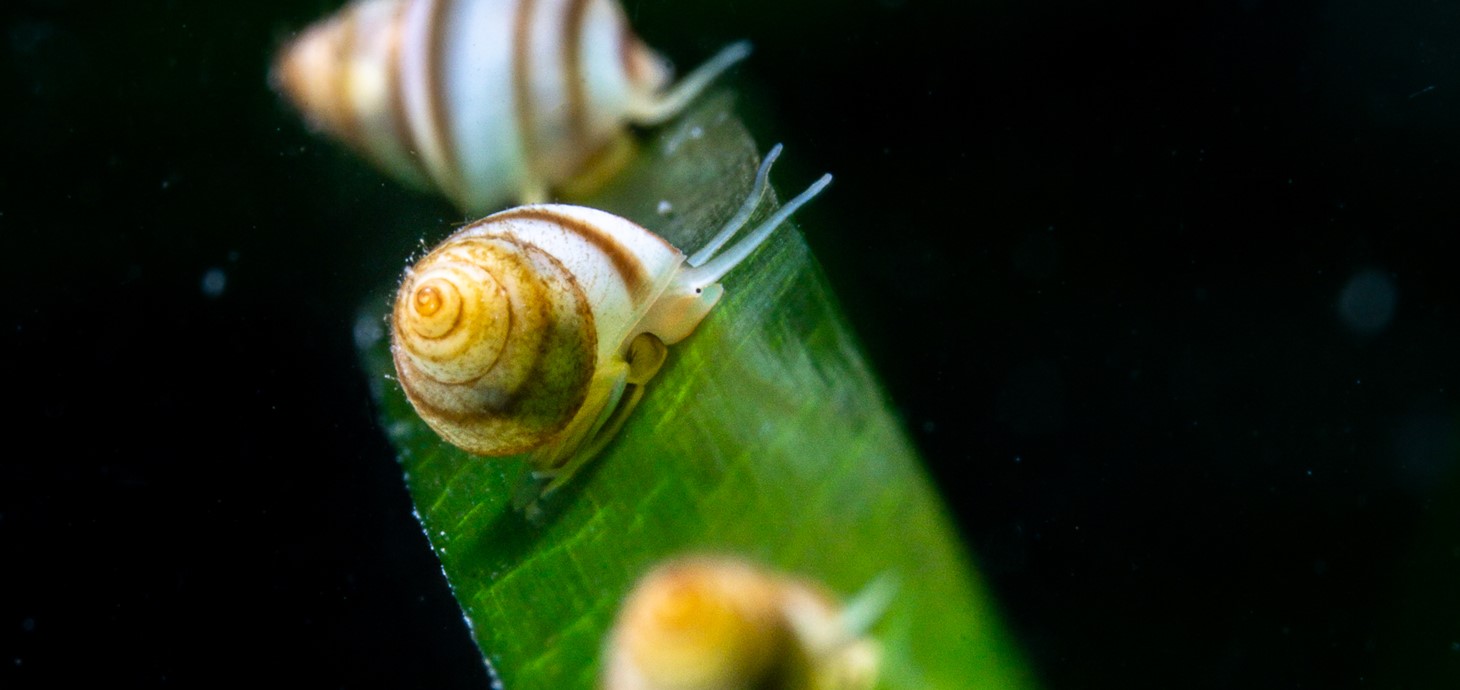
Marine snails are one of the diverse group of animals living within seagrass that help support a productive marine food web.
A new study of the British Isles’ coastal ecosystems has revealed that nitrogen enrichment is significantly reducing the abundance and variety of marine life.
The research, published by scientists at Swansea University and the charity Project Seagrass, warns that increasing nutrient flows are overriding local habitat conditions to restructure and deplete coastal biodiversity.
While the Planetary Boundaries for nitrogen and phosphorus flows have already been exceeded globally, this study provides a rare, large-scale assessment of how these nutrients impact the fine-scale diversity of our coastlines.
Factors causing the pollution include sewage, agricultural waste and poor land management.
The study examined seagrass meadows in 16 different marine environments, including estuaries, lagoons, and islands. These ranged from the Orkneys Islands and the Firth of Forth to the Solent and the Island of Skomer.
The findings were stark: higher nitrogen concentrations were consistently associated with a decrease in animal abundance and species richness.
Specifically, the researchers found that an increase of nitrogen could correspond to an approximately 90 per cent decrease in the abundance of life per unit of available habitat area.
"Eutrophication, the enrichment of water by nutrients, remains one of the most pressing environmental challenges in coastal waters, particularly regarding biodiversity loss," said the authors.
Key findings:
- Nitrogen as a driver: Nitrogen enrichment emerged as a consistent driver of biodiversity loss across the UK, even when accounting for the physical complexity of the environment;
- Habitat sensitivity: Coastal and lagoon environments showed the strongest declines under enhanced enrichment. In particular, phosphorus exhibited a devastating negative effect on life within lagoon environments;
- Site-specific impact: While some moderate enrichment was tolerated in specific estuarine settings, further enrichment in already impacted coastal sites exacerbated the loss of species; and,
- Beyond physical structure: Surprisingly, the physical traits of the marine vegetation (such as leaf length or biomass) had little influence on diversity compared to the overwhelming impact of local nutrient regimes.
The researchers argue that current regional conservation targets may be insufficient. Because the effects of nutrients are "context-dependent," effective management requires strategies tailored to the specific ecological conditions of a site.
They concluded: "Our findings demonstrate that eutrophication alters biodiversity in complex ways. Effective management will require site-specific nutrient reduction and monitoring strategies that reflect local conditions rather than uniform regional targets."
The research was conducted by scientists from Swansea University, and Project Seagrass. The team used standardised sampling and mixed-effects modelling to isolate the drivers of biodiversity across the UK seascape.
Read the research in full in Global Ecology and Conservation.