
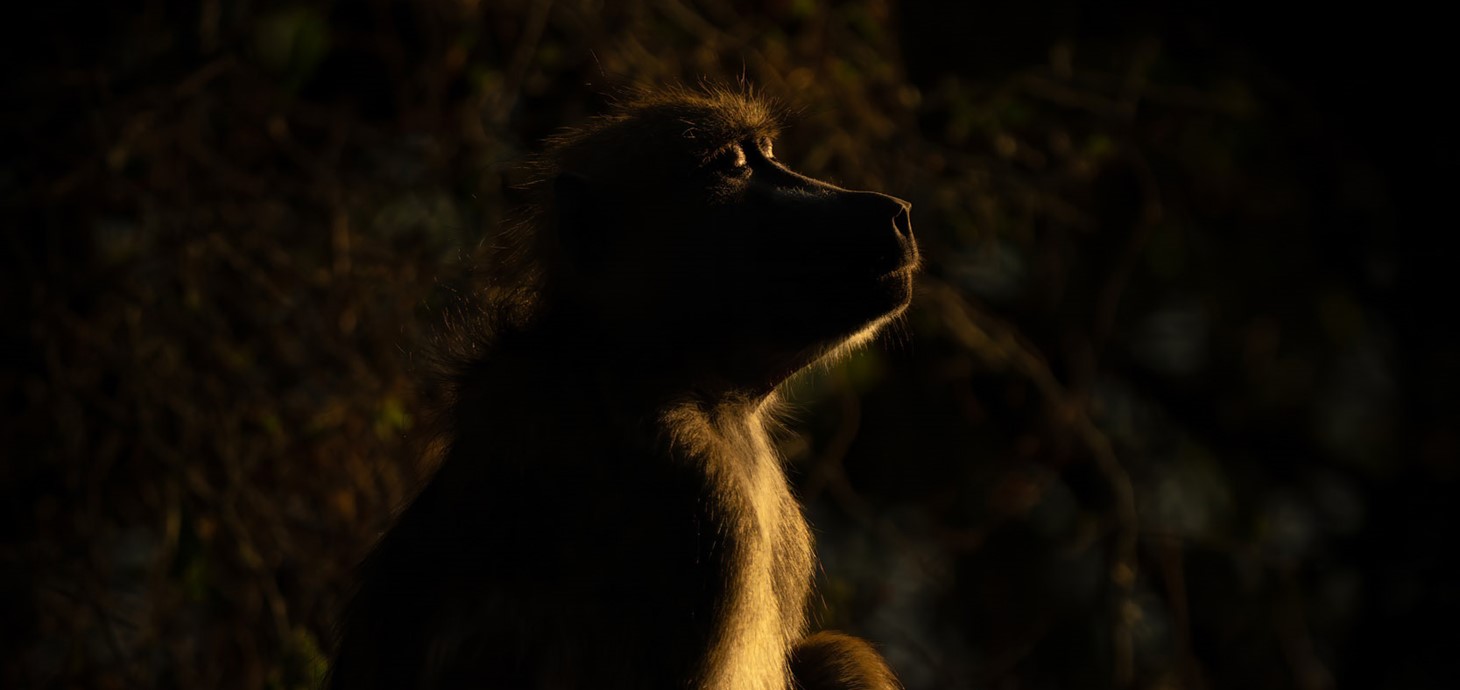
© Nick Dale Photography
Dominant baboons rule the troop by day, but at night, they may pay a hidden cost. A new study led by Swansea University has found that higher-ranking baboons get less and more fragmented rest at night than their lower-ranked troop mates.
In animals that sleep in groups, communal sleeping can offer protection, but much like in humans, close neighbours can disturb one another, affecting both the quality and quantity of sleep. Despite its importance, this social aspect of sleep has rarely been studied in the wild.
Using GPS and accelerometer collars, researchers tracked the daytime and night-time activity of a troop of chacma baboons in South Africa, a species with a strong hierarchical social structure.
“We expected dominant baboons to get better rest at night, perhaps because they could choose the most comfortable or sheltered spots,” said Swansea University PhD student Marco Fele, lead author of the study. “But we found the opposite – dominant baboons had less and more interrupted rest.”
The team discovered that baboons are in sync at night, with individuals resting and waking together. However, because higher-ranked baboons have more nearby group members, this leads them to exert greater influence on each other’s night-time behaviour compared to lower-ranked individuals – and so dominant baboons are more likely to wake each other up.
The study, published in Current Biology, is the first to find social hierarchies may impact sleep in wild primates. It suggests that daytime leadership and influence may come with a night-time cost.
“Just like in humans, sleep is essential for health and decision-making,” said Professor Andrew King, co-author of the study. “If dominant individuals are resting less at night, it could affect their performance and wellbeing. Equally, it may be that baboons get enough rest overall, so the costs would be minimal. Future work now needs to test the consequences of these night-time disruptions.”
The findings highlight how social bonds and dominance shape both individual and group behaviour, even during periods of rest – insights made possible by advances in tracking technology and data analysis and opening the door to new discoveries about social life in the wild.