-
HHC200
The Past in the Present: Exploring Heritage Practice and Debates
This module will give students an introduction to the heritage industry. It¿s suited both to those considering a career in this sector and to students who¿d like to think in more general terms about the way our society consumes the past. The module will combine critical analysis of a range of heritage sites with lectures and seminar discussion of the lively debates around the role of history and heritage in society. We¿ll explore the challenges of difficult histories ¿ such as the legacies of slavery and colonialism. We¿ll consider both tangible heritage, like physical buildings and landscapes, and intangible heritage, like language and culture. The module will be assessed by a coursework portfolio of site reviews and an extended essay.
-
HI-M01
Historical Methods and Approaches
This module introduces you to a diverse range of methodological approaches that underpin the discipline of history at an advanced level. You will explore how historians construct knowledge about the past, examining key debates around evidence, interpretation, narrative, and the politics of history-writing. You will engage critically with a variety of methods, including archival research, oral history, microhistory, cultural and social history, postcolonial and decolonial approaches, gender analysis, and digital history.
Through seminar discussions and a series of mini projects, you will develop a sophisticated understanding of the strengths, limitations, and ethical implications of different historical methodologies. The module also supports the development of research design skills in preparation for independent dissertation work.
Finally, the module will encourage you to think reflexively about your own role as researchers and to consider how methodological choices shape historical narratives and their relevance to contemporary global challenges.
-
HI-M38
Past and Present: Themes in History
This module offers you an in-depth engagement with key debates, theories, and methodological approaches that have shaped the discipline of history from the Enlightenment to the present. It is designed to provide you with a critical understanding of historiography as both a body of scholarly literature and a dynamic, reflexive practice central to historical inquiry. Through a close reading of foundational texts, schools of thought, and recent historiographical interventions, students will interrogate how historians construct arguments, use evidence, and navigate epistemological challenges.
You will engage with topics such as empiricism, Marxism, the Annales School, postmodernism, gender and postcolonial critiques, microhistory, memory studies, and global history. Emphasis will also be placed on the ethical and political dimensions of historical representation and the role of the historian in public discourse.
By the end of the module, you will be expected to demonstrate an advanced conceptual grasp of historical theory, critically assess differing historiographical traditions, and apply these insights to their own research practices. The module fosters independence of thought, originality in interpretation, and methodological self-awareness.
-
HIH122
Making History
How do historians study the past? Why do their accounts of the past differ, and why do they change over time? This module will help you to understand the various concepts, methods, and approaches that academic historians use when writing history and generating historical explanations. By the end of it, you will understand how and why professional historians disagree on many topics, and you will be equipped to evaluate competing interpretations of the same past events and processes.
The module also trains you in the fundamental skills required to study history as an undergraduate, and gives you an opportunity to learn more about the interests and expertise of the history staff you¿ll be working with at Swansea. It will help you make the transition from being taught history at school or college to studying history at university, and it will introduce you to the many different kinds of history you can explore in the course of your degree.
-
HIH237
The Practice of History
The purpose of the module is to encourage you to think more deeply about how historians work and, in particular, about how we as historians can locate and use primary historical sources effectively as a means of interpreting and understanding the past. During the module we will learn about the survival of historical evidence, how it is organised and made accessible to historians to undertake their research, and how to effectively locate and interpret it in your studies. We will consider how the process of doing historical research changes over time, in particular with the impact of recent developments like digitization.
At the core of the module will be the work you undertake with others in your seminar group using a range of primary sources which your seminar tutor will introduce to you. As part of the module assessment you will also undertake your own primary source based research project using items from these collections. The module is designed strengthen your analytical skills and to help prepare you for the more extensive uses of primary evidence which you will encounter in final year special subjects and dissertation.
-
HIH284
Disunited Kingdom? Class, Race, Gender and Social Division in Twentieth-Century Britain
This module examines the dynamics and structure of British society over the course of the 20th century. Despite radical social, political and economic changes, the idea of a British nation, a British people and a British way of life remained powerful and persistent. Yet beneath a veneer of social and and national unity were profound divisions and inequalities. This module explores how categories such as gender, class, race, region, nation and religion evolved and persisted. In doing so, the module considers what causes social change and the extent to which there was anything resembling British society at all. The module will relate these historical contexts to the present day. It asks how history can be used to understand contemporary social divisions and seeks to empower and enable students to think critically about how Britain and `Britishness¿ are constituted in contemporary society.
-
HIH3300
History Dissertation
The History dissertation is a free-standing, 40-credit module that runs across both semesters of Level Three. Candidates conduct research upon a subject of their choice, devised in consultation with a member of staff teaching for the degrees in History, and concerning a topic that falls within staff research and teaching interests.
-
HIH3377
A History of Sex and Gender
This module explores the history of sex and gender across a multitude of sites since the Medieval period, examining how and why understandings and ideologies changed. This module looks at the history of sex and gender from a social and cultural perspective, drawing out connections with class and race. It explores how ideas of masculinity and femininity have changed over time, how gender has impacted on social, economic and political life, and how dominant ideologies of gender relate to the experience of men¿s and women¿s daily lives. The module will also analyse changing attitudes towards sexuality and demonstrate how modern sexual identities are the product of historical processes rather than fixed and unchanging. Students will be introduced to the key historiographical debates around the history of gender and to the core challenges that drive historians while researching these vital themes.
-
HIH3380
Deformity, Deviance and Difference: Exploring Disability History
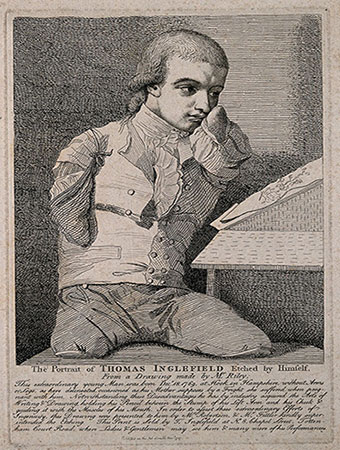
This module examines how understandings of disability have changed over time. It analyses how disabled people have been treated in the past, and how social policy towards disability has developed. The module discusses how ideas about human difference have evolved from the Middle Ages to the present day and uses a variety of source materials to examine disabled people¿s experiences in the past. It will explore how key events such as the Reformation, Enlightenment, Industrial Revolution, and the World Wars of the twentieth century have impacted upon the treatment of disabled people. The module asks what happens to our understanding of the past when we place traditionally marginalized people at the centre of our analysis. It provides context to modern struggles for disability rights and examines how historical understanding of disability can help to create a more equal and inclusive society today.
-
HIHM01
Approaches and Debates in Heritage and Public History
This module offers an introduction to current debates in heritage and public history and a chance to develop practical skills in the communication of history to broad audiences. It will provide an opportunity to reflect on the relationship between academic study and the past as portrayed by, with and for the public (or publics). You will explore case-studies in heritage from around the world. Why have museum presentations of history proved so controversial? What is the role of heritage in national and community-building? There will be opportunities to try out a variety of practical techniques in historical communication, and to reflect on their strengths and weaknesses. You will familiarise themselves with current policy contexts for heritage and public history, and will acquire valuable skills for careers in the heritage sector and beyond.